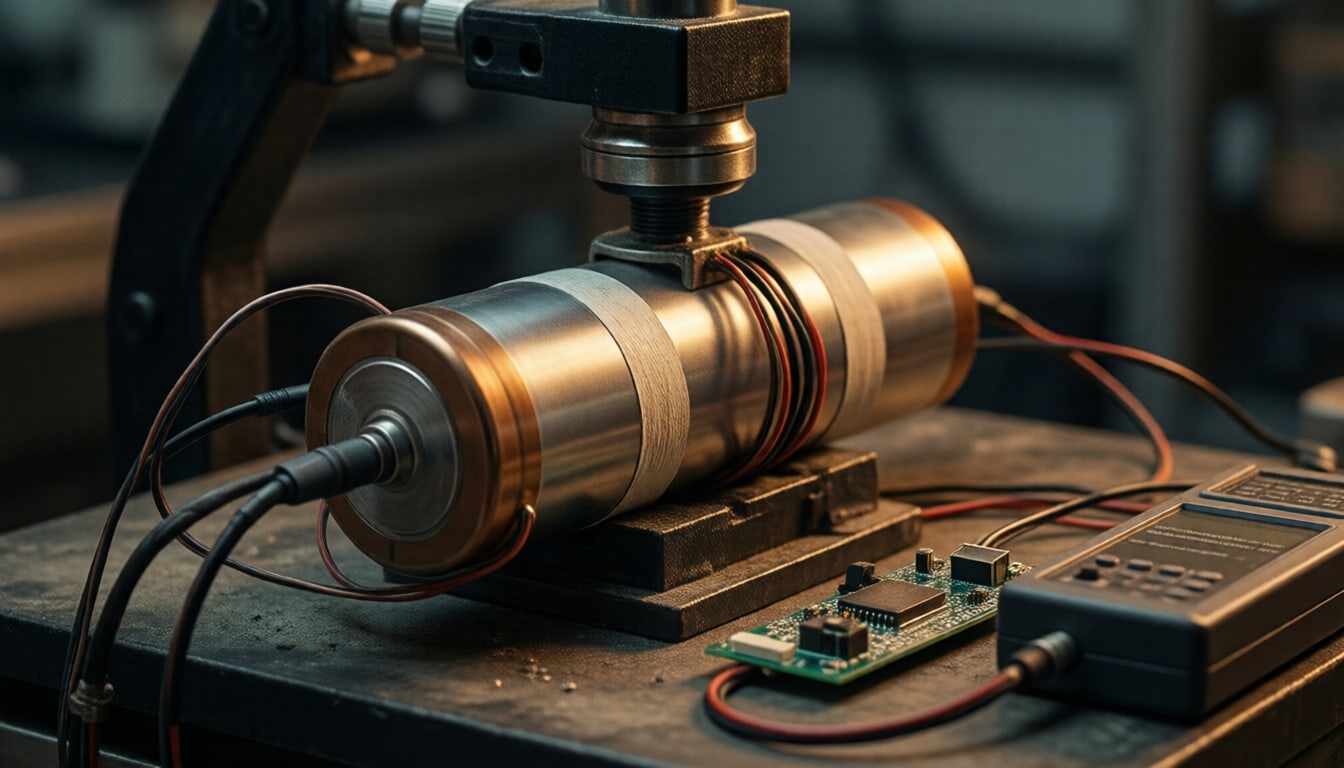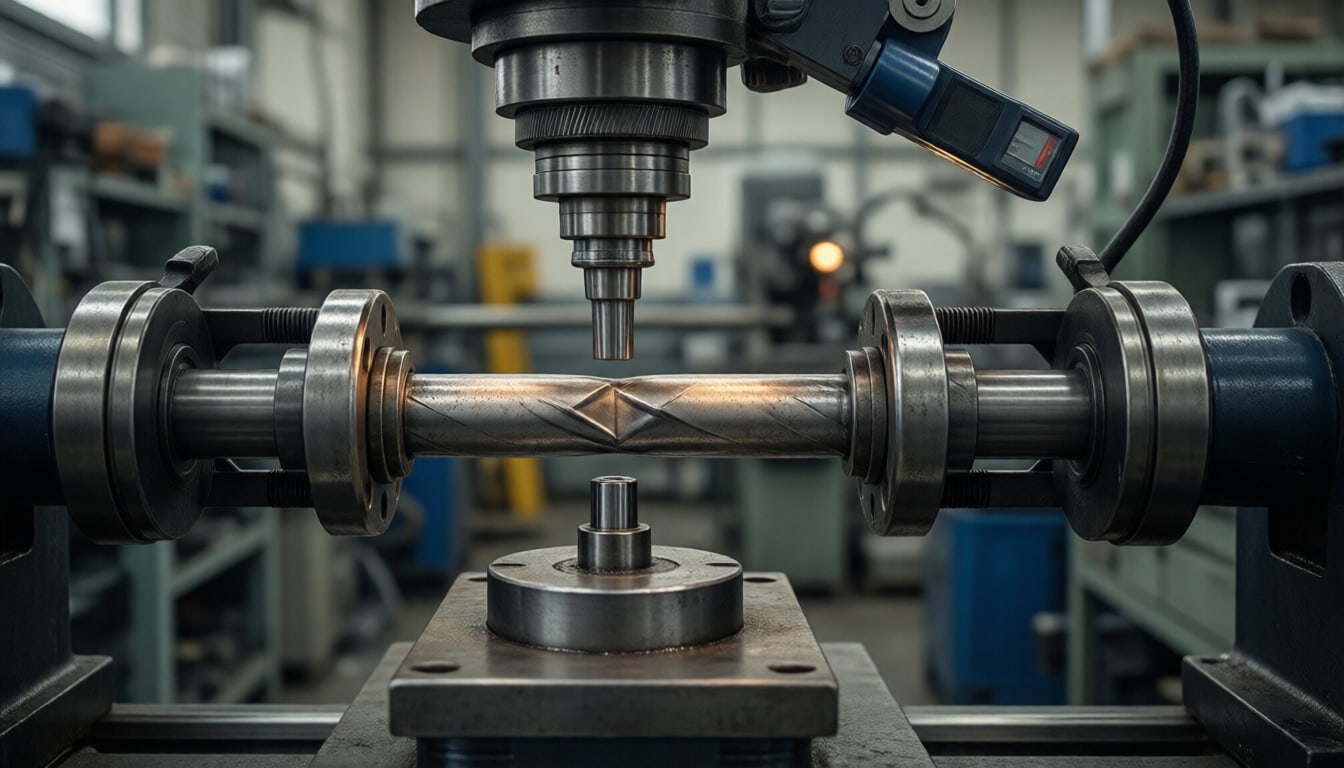
Pull on a steel bar and two things happen: internal forces build up, and the bar stretches. Engineers measure the first as stress and the second as strain.
Stress σ is force per unit area (Pa, or more usefully MPa = N/mm²). Strain ε is dimensionless: the stretch divided by the original length.
The straight part: Hooke's law
For small loads, stress is proportional to strain:
E, Young's modulus, is the stiffness of the material itself — about 200 GPa for steel, 69 GPa for aluminium, 3.5 GPa for PLA plastic.
Beyond the line
Keep loading and the curve bends: at the yield strength the material starts to deform permanently. Beyond that comes work hardening, then necking, then fracture at the ultimate tensile strength. Paste real test data into the CSV plot tool — its example data set is a typical steel-like curve — and fit the elastic part with a straight line to read off E.
Factor of safety
Designers keep working stresses well below yield: the factor of safety n = σ_y / σ covers uncertainty in loads, material and manufacturing. Calculate it with the stress & strain tool.
Use it
In the elastic region, stress is proportional to strain.
Axial force divided by cross-sectional area.
Axial stress, strain, elongation and factor of safety against yield for a bar under tension or compression.
Paste CSV data, get a clean technical chart instantly, fit a line or polynomial, export SVG.
Discussion
Technical questions and corrections are welcome. Comments are signed and checked before they appear.
No comments yet.
Sign in to add a typed review comment. Reviews are signed with your name.