What was built
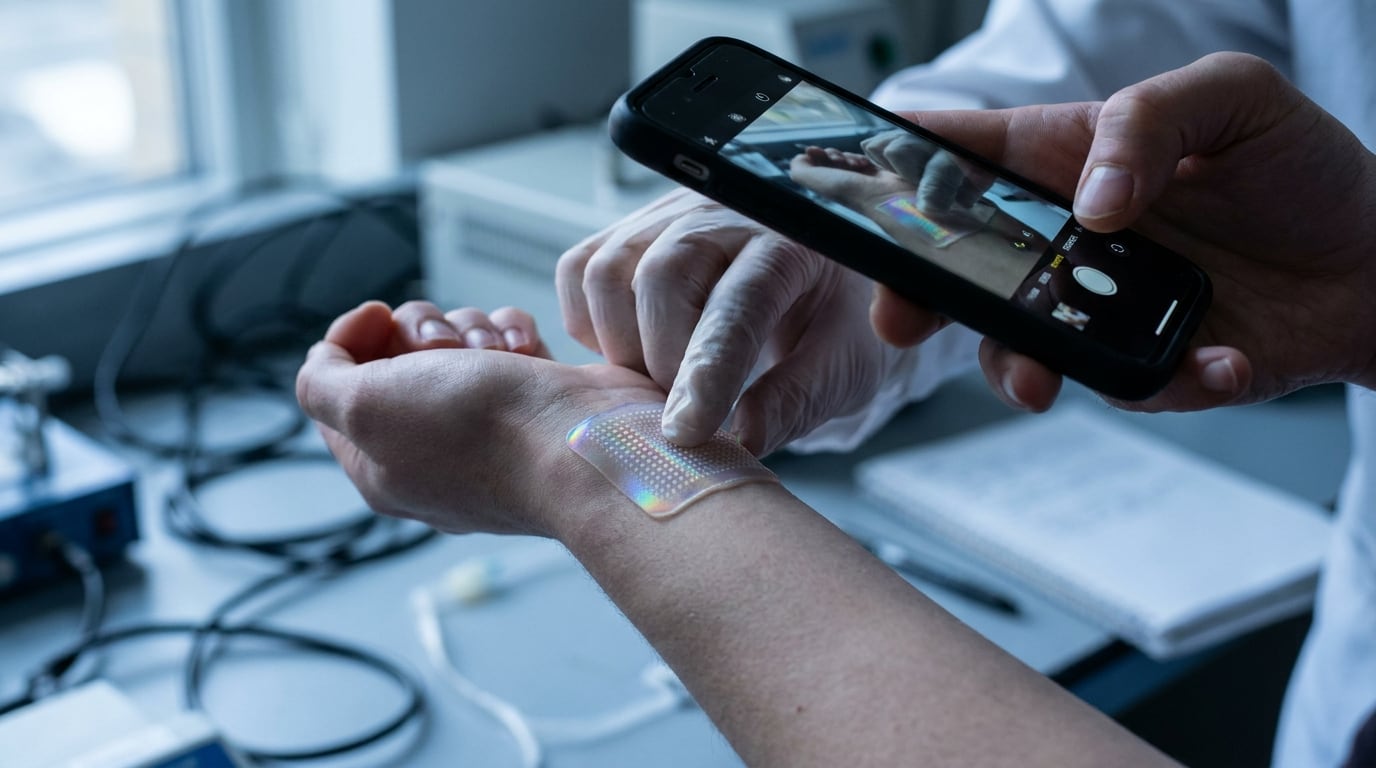
Researchers at the Norwegian University of Science and Technology (NTNU) have built a thin, flexible silicone patch that changes colour with the heartbeat, according to a report on the work in the journal Advanced Materials. The device, called OptoPatch, contains no electronics, batteries, wires or sensors. It produces a visible signal that an ordinary smartphone camera can record.
The patch is designed to capture arterial pulse waveforms and to pick up features within the pulse wave that relate to blood vessel stiffness. The researchers present it as a potentially simpler and cheaper route to cardiovascular monitoring.
How it works
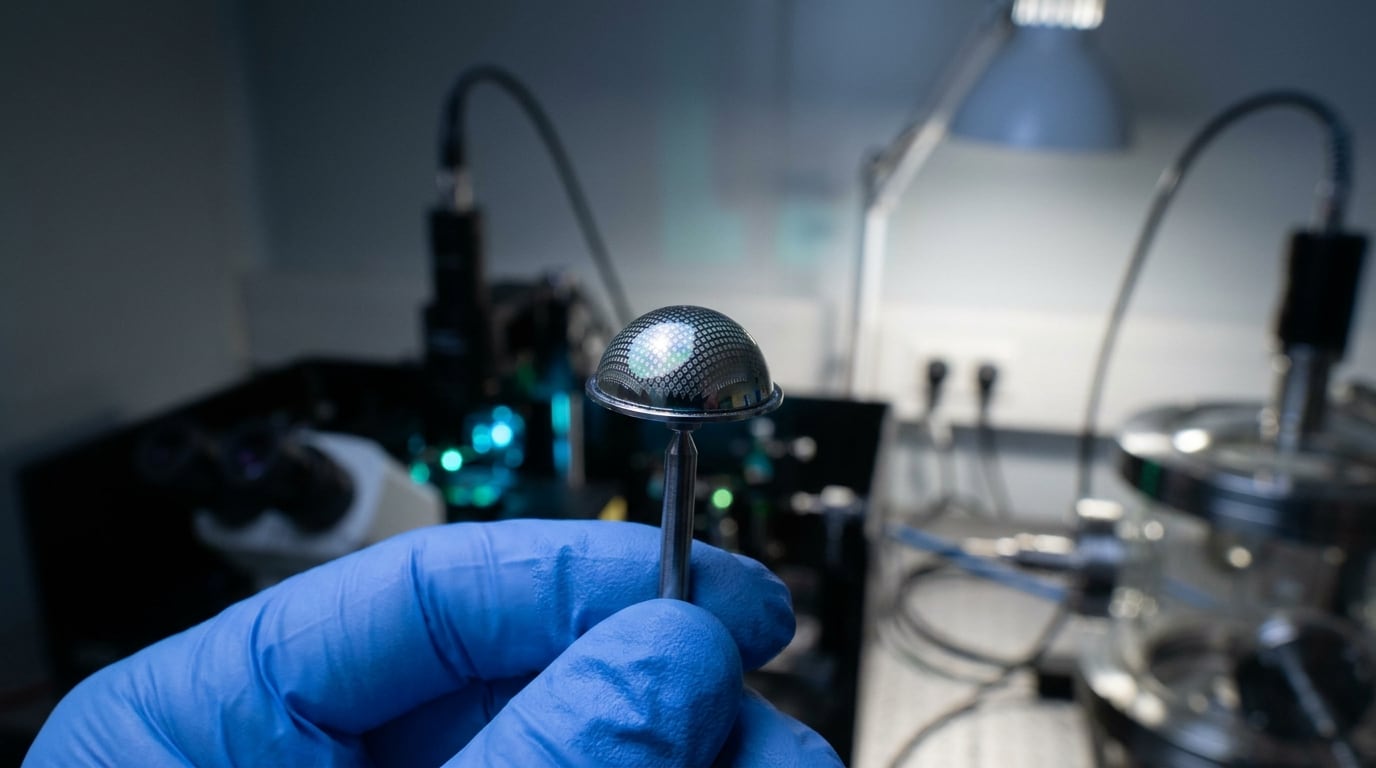
The patch is made from polydimethylsiloxane (PDMS), a soft, elastic silicone rubber, with two engineered surfaces. The upper surface carries extremely fine, regularly spaced grooves measuring hundreds to a few thousand nanometres apart.
When the patch sits over an artery close to the skin, such as the radial artery in the wrist, the pressure wave from each heartbeat stretches and relaxes the silicone. This changes the spacing and orientation of the grooves, which alters the angles at which light is reflected and therefore the colours and brightness a camera sees. The changes may be too subtle for the naked eye, but a smartphone camera can detect them. Software analyses the changing red, green and blue intensities to reconstruct the arterial pulse waveform.
The underside uses an array of microscopic, suction-cup-inspired structures, modelled on the octopus, that grip the skin without adhesives. The optical measurement takes place at the silicone's upper surface rather than through the skin, so the sensing mechanism does not depend on how much light the skin absorbs. This avoids the direct influence of melanin that can affect conventional photoplethysmography (PPG) devices, which measure blood volume changes through the skin.
How it was tested
The team tested the patch on 13 healthy volunteers, placing it over the radial artery on their wrists. Ordinary Samsung Galaxy A55 and iPhone 14 smartphones recorded the patch at 60 frames per second while reference pulse waveforms were recorded simultaneously with a clinical continuous blood-pressure monitoring system.
The waveforms reconstructed from the smartphone recordings closely matched the clinical reference, achieving a mean correlation of 0.94, according to the researchers. In simultaneous comparisons, the patch produced waveforms that more closely resembled the reference pressure signal than those obtained using conventional reflectance PPG, camera-based PPG and piezoelectric pulse sensors.
The patch also captured subtle features within individual pulse waves, including the timing of reflected pressure waves, which can provide information about arterial stiffness. It identified reflected-wave features in 12 of the 13 volunteers and recorded some irregular heartbeat events that appeared in the clinical reference measurements.
What is not yet proven
The researchers tested the patch on just 13 healthy volunteers, all seated at rest. Its performance during walking, running or other activity involving significant body movement remains unknown. Differences in skin and tissue thickness, and how firmly the patch adheres, could also affect readings.
Although ordinary smartphones captured the colour changes, the recordings were processed separately using computer-based software, so a dedicated smartphone app would be needed for everyday use. The patch has yet to be clinically validated for measuring vascular stiffness or diagnosing cardiovascular diseases. It cannot directly measure blood pressure or blood oxygen saturation, nor can it replace an ECG for monitoring the heart's electrical activity.
Build details
Torjus Lines Steffensen, a postdoctoral researcher in medical imaging at NTNU, says: "What we are essentially doing is taking a lot of the complexity involved in these measurement systems and shifting it to the smartphone."
Build sheet
- Mean correlation with clinical reference: 0.94
- Volunteers tested: 13 healthy, seated at rest
- Reflected-wave features identified: 12 of 13 volunteers
- Camera frame rate: 60 frames per second
- Grating groove spacing: hundreds to a few thousand nanometres
- Material: polydimethylsiloxane (PDMS) silicone rubber
- Onboard electronics, batteries, wires, sensors: none
Sources
- Color-shifting patch measures pulse without batteries or electronics — New Atlas
Other news outlets are named as sources but not linked.
Discussion
Technical questions and corrections are welcome. Comments are signed and checked before they appear.
No comments yet.
Sign in to add a typed review comment. Reviews are signed with your name.