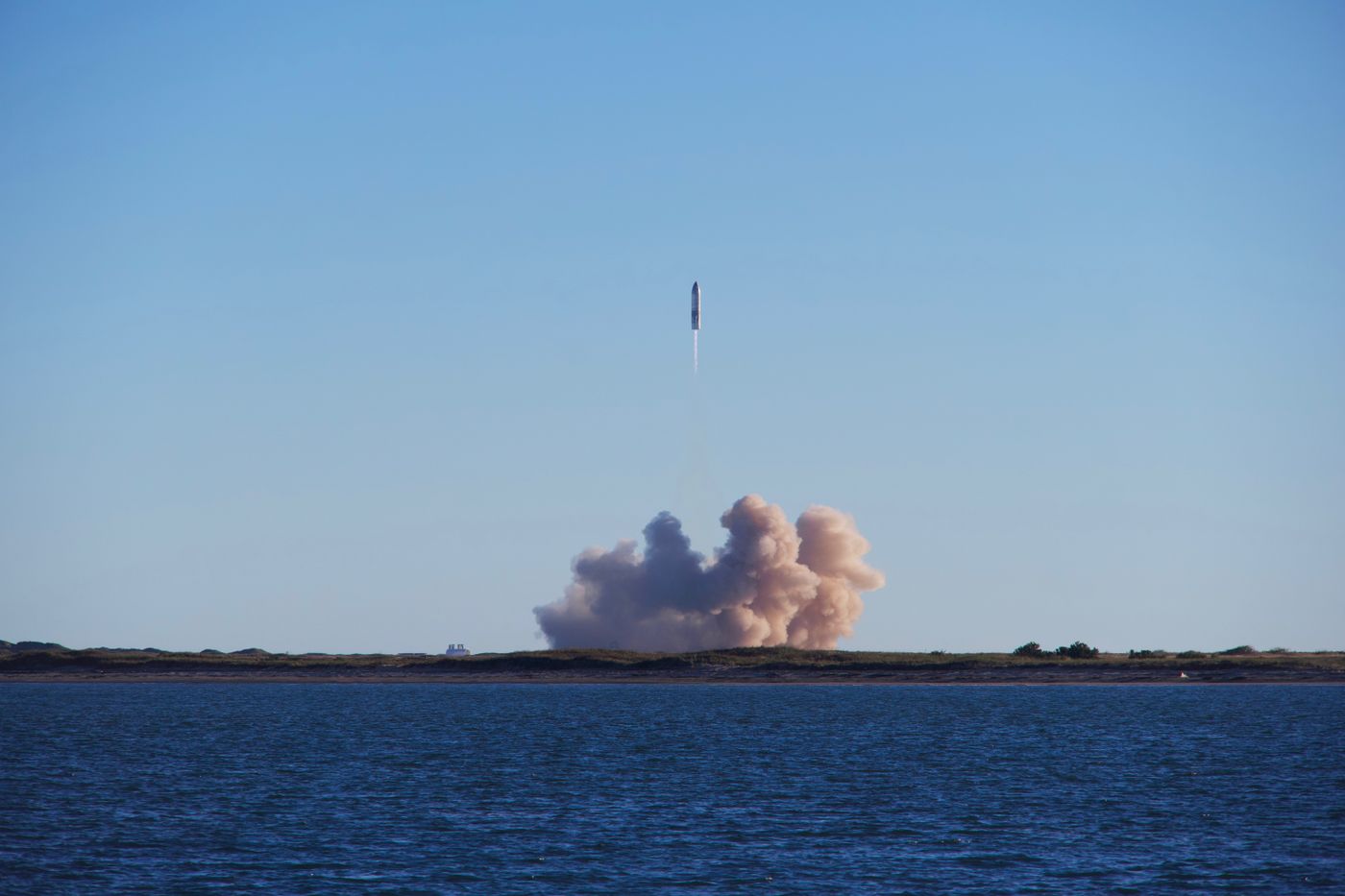
Yanhe Technology launched three independently developed space photovoltaic modules into a 535 km sun-synchronous orbit on 7 November. The modules flew aboard Galactic Energy's Ceres-2 Y3 rocket from the Jiuquan Satellite Launch Center. Yanhe described the mission as China's first simultaneous in-orbit validation of three perovskite-based PV technologies, according to pv magazine.
Two tandem modules are installed on the North University of China-1 satellite. That satellite operates in a dawn-dusk orbit, where near-continuous sunlight places demanding requirements on power density and long-term stability. A flexible single-junction perovskite module is installed on the Yunyao-1 28 satellite. There it will undergo imaging during thermal cycling and performance monitoring to assess degradation from particle radiation and atomic oxygen exposure.
Yanhe has not disclosed the conversion efficiencies, rated power outputs, active areas or weights of the three modules. The company had not responded to a request for additional technical specifications at the time of publication. The launch, satellite platforms and orbital altitude were confirmed by Yanhe's official announcement and independent industry reports.
The mission follows a September in-orbit campaign in which Yanhe deployed a flexible perovskite module aboard the Tianyi-52 satellite for long-term performance monitoring. The company described that as China's first component-level in-orbit test of flexible perovskite PV technology. In October, Yanhe established a joint laboratory with the Hong Kong University of Science and Technology for research on perovskite solar cells, space photovoltaics, orbital energy systems and flexible devices.
Chief Technology Officer Peng Zongyang said the perovskite-silicon and perovskite-CIGS tandem architectures target different segments of the space PV market. He said the mission aims to evaluate both technologies' efficiency and stability under actual orbital conditions. The company is assessing the fully thin-film perovskite-CIGS tandem architecture for potential advantages in flexibility and radiation resistance over silicon-based tandems.
However, maintaining performance under prolonged radiation exposure and repeated thermal cycling remains a key technical challenge. The mission is expected to generate comparative in-orbit performance data for the three architectures. Yanhe has not specified the monitoring duration or the amount of telemetry expected.
Key facts
- 535 km — orbital altitude of the sun-synchronous orbit carrying the three modules
- 3 — perovskite-based PV technologies validated simultaneously in orbit, per the company
- 2 — tandem modules (perovskite-silicon and perovskite-CIGS) on the North University of China-1 satellite
- 1 — flexible single-junction perovskite module on the Yunyao-1 28 satellite
Sources
- Yanhe Technology launches three perovskite solar module technologies into orbit — pv magazine
Other news outlets are named as sources but not linked.
Discussion
Technical questions and corrections are welcome. Comments are signed and checked before they appear.
No comments yet.
Sign in to add a typed review comment. Reviews are signed with your name.