Winter heating cut the simulated flight range of an electric vertical takeoff and landing (eVTOL) aircraft—a battery-powered craft that takes off and lands vertically, often described as a "flying car"—by up to 22% compared with spring, the season with the longest effective range. That finding comes from a simulation study, not flight testing, led by Professor Daisuke Sasaki of the Graduate School of Engineering at Osaka Metropolitan University and published in Applied Thermal Engineering.
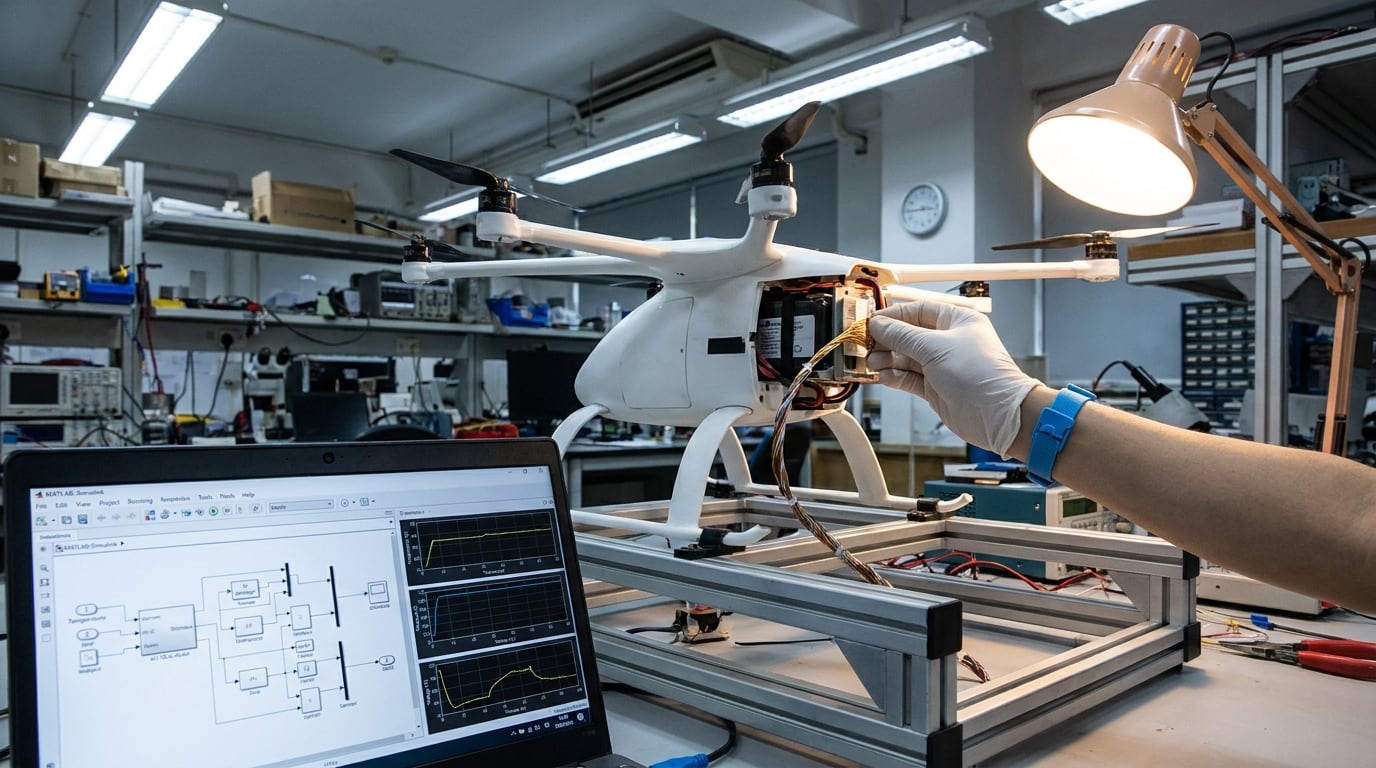
The researchers built a mission-level electro-thermal computational model in MATLAB/Simulink and ran a representative eVTOL aircraft through different seasonal atmospheric conditions. In simulated summer conditions, energy spent managing temperatures reached about 16% of the battery's capacity. The study attributes the seasonal differences to extra power for cabin cooling and heat rejection in summer, and to greater heating demand and propulsion power from changes in air density in winter.
The study states that thermal-management architecture should be modelled when designing eVTOL aircraft, because propulsion, battery and cabin subsystems are interlinked and compete for the same limited energy supply. "Our research highlights the need to incorporate thermal loads into mission-level energy predictions," first author Haruka Nakayama said.
The researchers suggest that thermal-aware flight planning, system design and energy management strategies could be vital to maximizing flight distance. They describe the work as a foundation for evaluating what benefits eVTOL aircraft can realistically deliver, to what distances and with what level of reliability.
Key facts
- Up to 22%: reduction in simulated eVTOL range in winter compared with spring
- About 16% of battery capacity: simulated summer energy use for temperature management
- MATLAB/Simulink: computational model used for the mission-level electro-thermal simulation
Sources
- Mission-level integrated electrical–thermal simulation for energy and thermal management of eVTOL aircraft — Applied Thermal Engineering — Haruka Nakayama, Yukinori Inoue, Adriana Andreeva-Mori et al.
- Winter could cut electric air taxi range by up to 22%, simulations suggest — Phys.org (Technology)
Discussion
Technical questions and corrections are welcome. Comments are signed and checked before they appear.
No comments yet.
Sign in to add a typed review comment. Reviews are signed with your name.