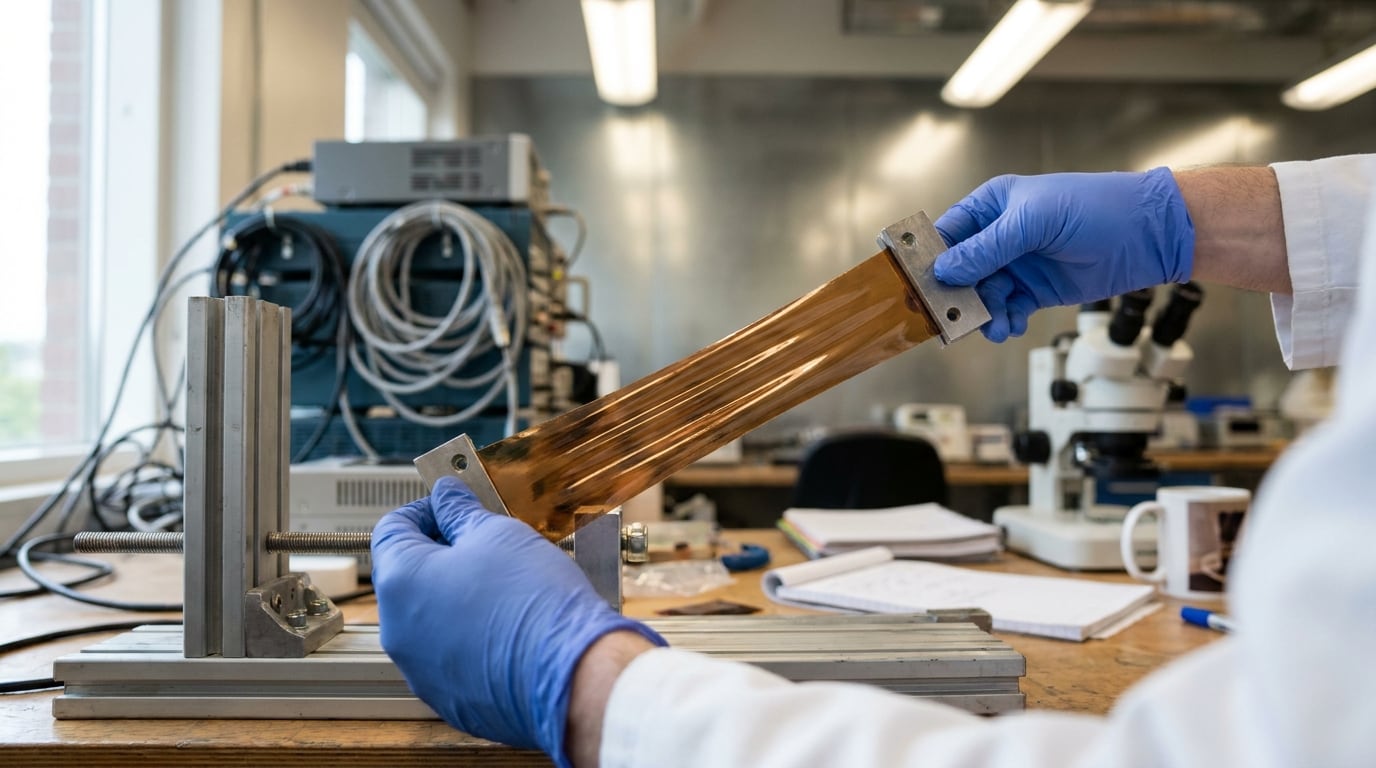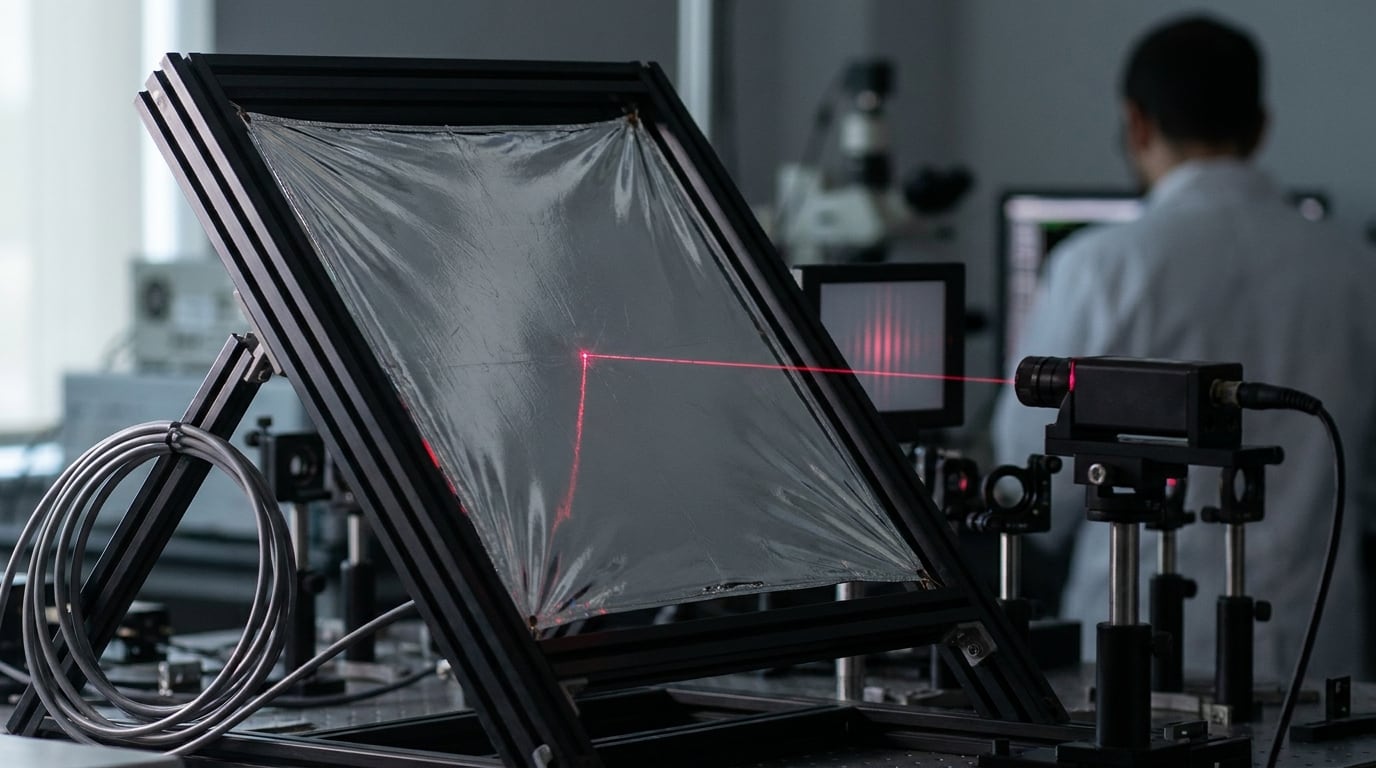
As a laser-pushed solar sail approaches 75% of the speed of light, a new source of resistance emerges that works against its motion, according to a theoretical analysis by Chao Shen and Jiaze Li of the Harbin Institute of Technology. The paper is available on arXiv.
Although light has no mass, it carries momentum and can transfer it to objects it strikes, creating a tiny push known as radiation pressure. The analysis covers three ways photons transfer momentum to a sail: incident light, specular reflection and diffuse scattering. According to the study, incident light provides the strongest contribution, followed by specular reflection and then diffuse scattering.
At relativistic speeds, the incoming laser light becomes progressively redshifted from the sail's perspective through the Doppler effect. As a result, it transfers momentum less effectively, and thrust from all three contributions falls. The researchers also identify an effect at approximately 75% of the speed of light: relativistic light aberration, which alters the apparent directions in which light travels at such speeds, concentrates the diffusely scattered light in the spacecraft's forward direction as seen by an observer at rest on Earth, and the resulting recoil produces drag instead of thrust.
The researchers state that the laser still generates a positive overall force and the sail continues to gain speed; the added resistance reduces the efficiency of the system. The study models only the forces produced by light. It excludes resistance from interstellar gas and dust, thermal challenges from powerful lasers striking a thin sail, and treats the sail as an idealized mirror. The researchers suggest that metamaterials and photonic crystals might turn some of these relativistic effects into an advantage by controlling how light scatters, potentially helping a sail stay aligned with the laser beam. They add that humanity remains far from building and testing a complete solar sail system capable of reaching another star, and that a fuller description would also need to account for additional effects such as the curvature of spacetime.
Key facts
- 75% of the speed of light: speed at which diffuse scattering begins producing drag instead of thrust
- 3 photon momentum contributions analysed: incident light, specular reflection, diffuse scattering
- Incident light: strongest contribution in the researchers' breakdown, ahead of specular reflection and diffuse scattering
- Laser still generates a positive overall force, so the sail continues to gain speed
Sources
- Interstellar solar sails hit a bizarre problem at 75% of light speed — ScienceDaily (Engineering)
Discussion
Technical questions and corrections are welcome. Comments are signed and checked before they appear.
No comments yet.
Sign in to add a typed review comment. Reviews are signed with your name.