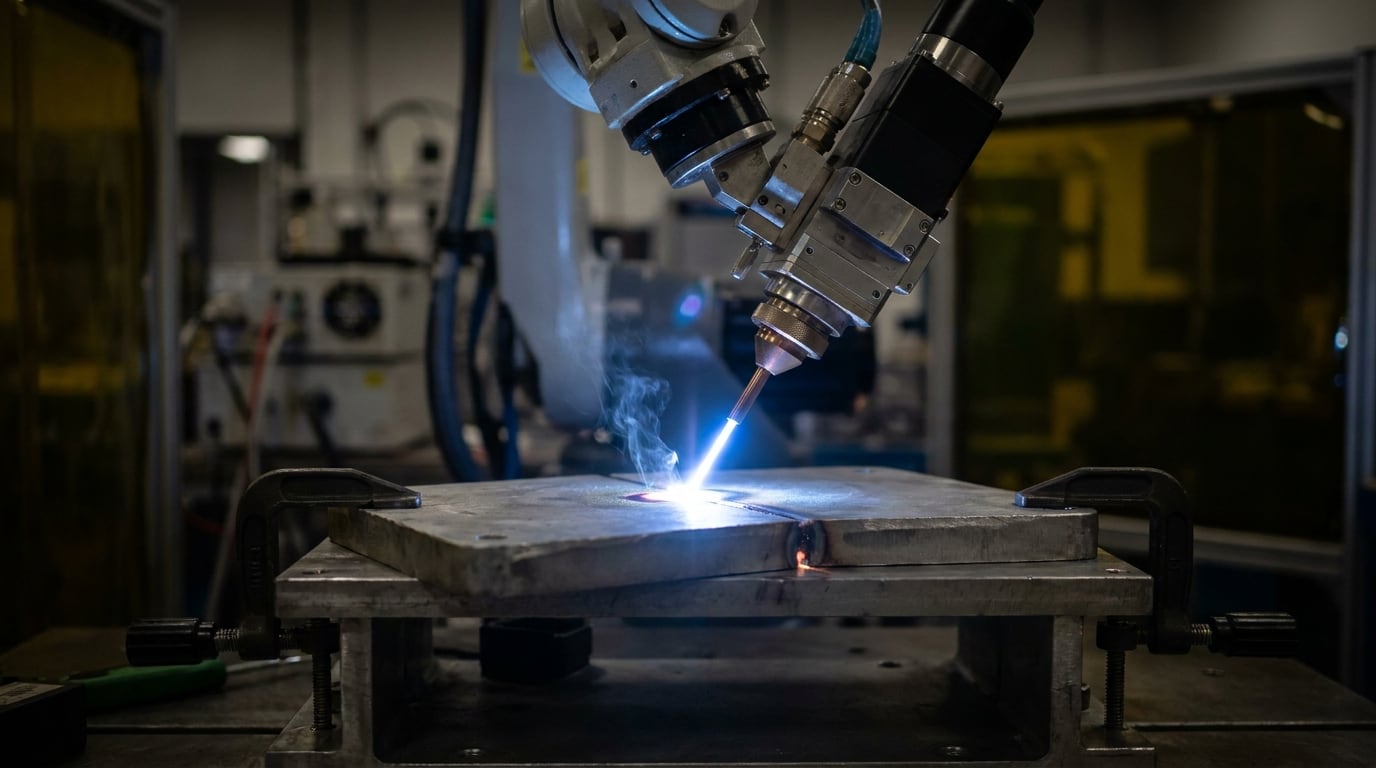
Researchers at Fraunhofer IWS have developed a laser welding process, REMOWELD DBO, that joins cast aluminium directly to cast aluminium, the institute reports. In conventional laser beam welding, process-related pores and gas inclusions in die-cast material can open, the institute states. The released gases cause pores in the weld and sometimes violent melt ejections, compromising joint quality.
The new process uses targeted dynamic beam oscillation. The institute reports significantly fewer pores, dense welded joints and reduced melt ejection.
Fraunhofer IWS says the process opens new opportunities for modular large-scale structures made from die-cast aluminium. Manufacturers could assemble large structures such as battery trays or suspension strut towers from two or more smaller die-cast parts instead of designing them as a single large casting, the institute states. Design teams could then vary geometries, wall thicknesses and materials within a large structure, and the modular approach reduces dependence on extremely large die-casting machines, according to the institute.
The institute also links modular design to more targeted material use. It states that modular structures can selectively incorporate the properties of secondary aluminium alloys without requiring a single material to meet every requirement of a complex, large-scale component. This offers potential to increase the share of recycled material in the alloy and reduce the carbon footprint.
Fraunhofer IWS further developed REMOWELD DBO for new car body concepts within the Fraunhofer flagship project FutureCarProduction, in which eight Fraunhofer institutes are pooling expertise to develop vehicle structures described as environmentally, technically and economically sustainable. The researchers are investigating new casting, forming and joining processes and the use of secondary materials. A holistic assessment method takes into account material and product quality, repairability and crash safety. The Dresden-based institute focuses on laser welding aluminium cast components and hybrid joints within the project.
Christoph Leyens, director of Fraunhofer IWS, says cast-to-cast welding "combines the advantages of cast structures with the flexibility of modular design". Dr Dirk Dittrich, group manager for laser welding at the institute, says the process "lays the technological foundation for modular large-scale components".
Key facts
- Dynamic beam oscillation widens the keyhole and improves degassing of the molten material, according to Fraunhofer IWS
- The process joins cast aluminium directly to cast aluminium
- Eight Fraunhofer institutes take part in the FutureCarProduction flagship project
- Potential applications cited include battery trays and suspension strut towers assembled from two or more smaller die-cast parts
Sources
- New laser welding process joins aluminum castings with fewer pores and less spatter — Phys.org (Technology)
Discussion
Technical questions and corrections are welcome. Comments are signed and checked before they appear.
No comments yet.
Sign in to add a typed review comment. Reviews are signed with your name.