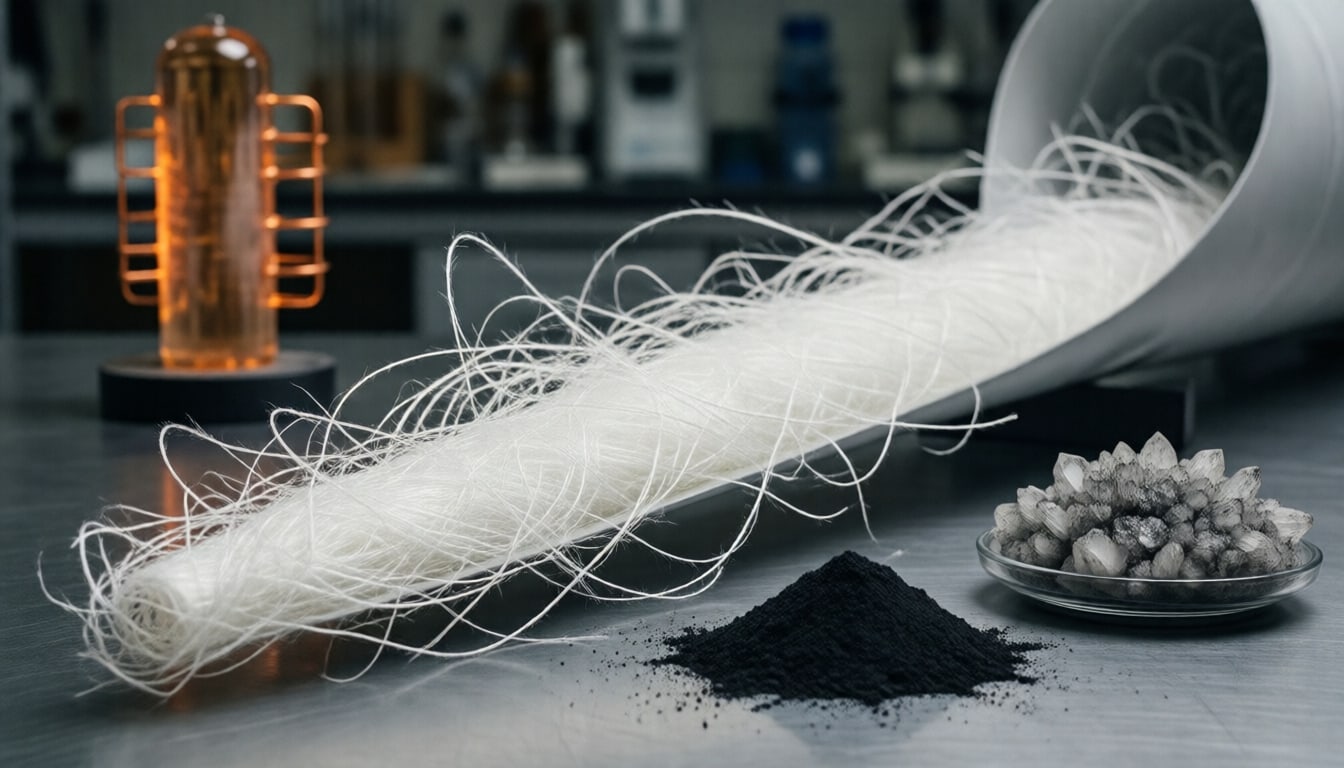
Flash Joule heating can convert discarded wind turbine blades into silicon carbide and graphene, researchers at Tsinghua University report in a study published in Chem Circularity on 6 November 2026.
Wind turbine blades are typically made from silica-containing fiberglass and carbon-rich polymer resin, the researchers write. Heating the waste to about 2,000°C in seconds lets carbon react with silica to form silicon carbide, a hard, heat-resistant material, while carbon also reorganises into graphene. The same durability that suits blades to UV radiation, extreme temperatures, wind gusts and lightning strikes makes them difficult to break down at end of life, according to the paper.
The recovered silicon carbide and graphene mixture can go back into resins for new wind turbine blades, the researchers report. At 0.3 % by weight, the recovered materials made resin stiffer and stronger and improved its resistance to deformation by 27 % under tension and 9 % when bent. At 0.1 % concentration by weight, they increased the resin's thermal diffusivity by 41 %.
The paper estimates the process could cut greenhouse gas emissions by about 83 % compared with pyrolysis and about 92 % compared with chemical dissolution, two conventional recycling routes. The authors also estimate the method could turn a profit of about USD 80 per ton because the recovered silicon carbide and graphene are valuable, whereas pyrolysis costs about USD 460 per ton and chemical dissolution about USD 1,800 per ton.
Deng says wind turbines typically have a service life of around 20 years, and that as aging turbines are decommissioned, especially in China, much of the waste has ended up in landfills. The team says it is working on ways to scale up the process and hopes to collaborate with industry partners. The method could also be adapted to other durable materials used in aerospace, automotive manufacturing, electronics packaging and construction, the team says.
Key facts
- About 2,000°C reached in seconds by flash Joule heating of blade waste
- 27 % improvement in resistance to deformation under tension at 0.3 % by weight of recovered materials in resin
- 41 % increase in resin thermal diffusivity at 0.1 % concentration by weight
- Estimated emissions cut of about 83 % versus pyrolysis and about 92 % versus chemical dissolution
- Estimated profit of about USD 80 per ton, versus costs of about USD 460 per ton for pyrolysis and about USD 1,800 per ton for chemical dissolution
Sources
- Upcycling of waste wind turbine blades by electrothermal reduction toward circular resin composite applications — Chem Circularity — Hao Bi, Zhuoqing Zhang, Geng Zhan et al.
- Scientists give hard-to-recycle wind turbine blades a second life — Phys.org (Technology)
Discussion
Technical questions and corrections are welcome. Comments are signed and checked before they appear.
No comments yet.
Sign in to add a typed review comment. Reviews are signed with your name.