What the researchers built
Researchers at the Federal University of São Carlos (UFSCar) and the Federal University of Rio Grande do Norte (UFRN) in Brazil have made a nanomaterial from steel industry waste and seashells. Activated by sunlight, the material breaks down a water pollutant and produces hydrogen, according to the study published in September in the International Journal of Hydrogen Energy.
The material is a heterojunction — an interface formed by combining two materials with different electrical properties: hydroxyapatite (HAp) and iron oxide (Fe₂O₃). The work involved researchers from the Functional Materials Development Center (CDMF), a Research, Innovation, and Dissemination Center (RIDC).
Where the two ingredients come from
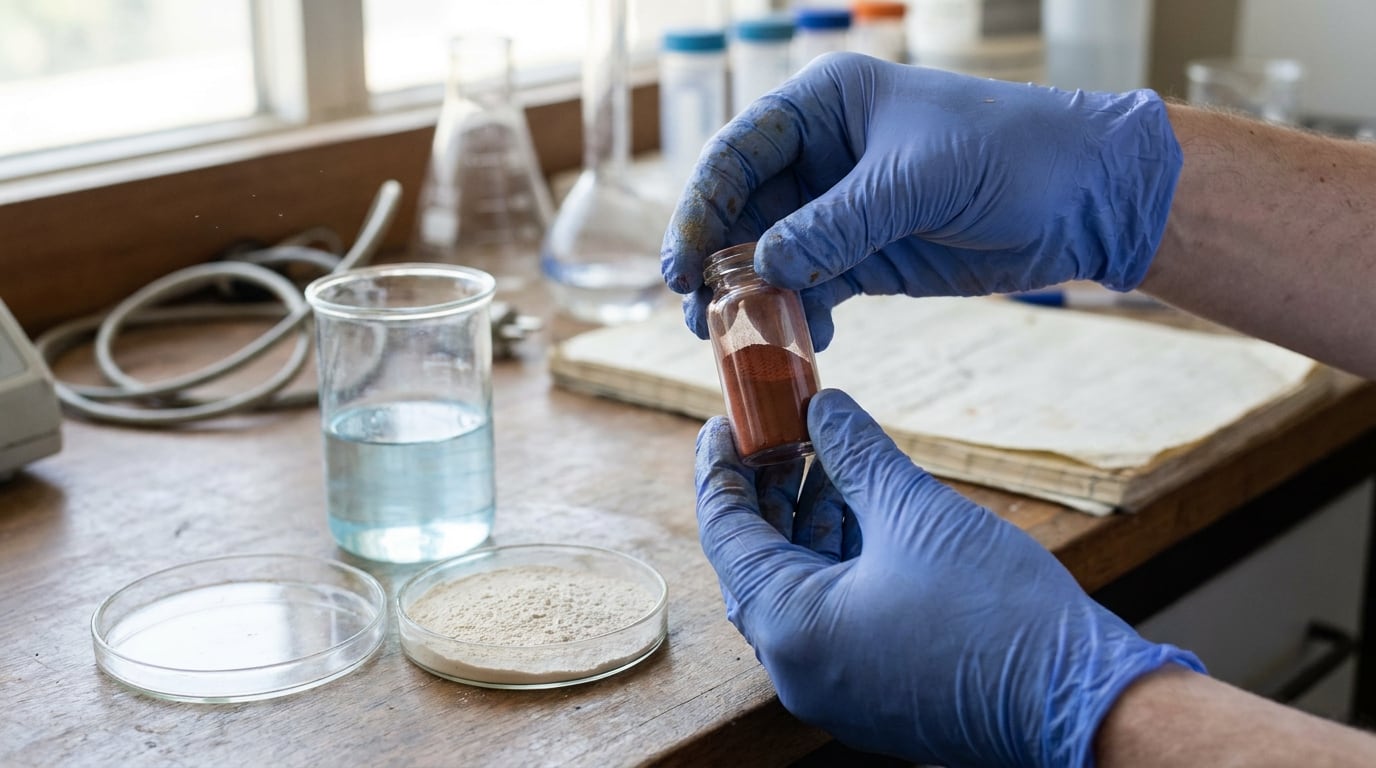
Iron oxide was recovered from blast furnace dust, a particulate byproduct generated during the gas-cleaning stage of steelmaking that was destined for disposal. From 5 grams of blast furnace dust, 1.02 grams of iron oxide were recovered, a yield of over 20%, according to the source.
Hydroxyapatite was obtained from marine shell waste, with a yield of 63% for hydroxyapatite production from that waste. The researchers combined the two materials in three iron oxide ratios — 20%, 40% and 60% — producing samples named HFe20, HFe40 and HFe60.
How the material was tested
The team evaluated the structural, morphological, optical and electrochemical properties of the samples, as well as their photocatalytic activity — the process by which light energy activates a material to degrade pollutants and split water molecules, generating hydrogen, under solar radiation. HFe40 performed best.
In the dye test, exposure to sunlight enabled the system to remove approximately 75% of the methylene blue from the water in two and a half hours. Methylene blue is widely used in the textile industry and poses risks to human health; it also blocks light in bodies of water, impairing photosynthesis in aquatic organisms.
In photocatalytic hydrogen production tests, 20 milligrams of HFe40 were added to 20 millilitres of a 10% lactic acid solution. The system was exposed to solar radiation for four hours while a gas sensor monitored the hydrogen released. During this period, the heterojunction produced more than 25 micromoles (0.05 milligrams) of H₂ per gram of material.
To simulate natural environmental conditions, the researchers tested the material in various aqueous matrices, including rainwater, lake water and tap water, and observed minor differences in HFe40 activity.
Stability across reuse cycles
After five reuse cycles in the methylene blue degradation process, photocatalytic activity of HFe40 decreased by only 6%, the researchers report.
Limits the researchers report
The researchers emphasised to the CDMF Press Office that challenges remain before any potential large-scale application. These include increasing the efficiency of hydrogen production, more accurately quantifying the gas produced and evaluating the stability of the material over longer periods.
According to the authors, the main result of the study is demonstrating an integrated circular economy strategy in which industrial and bio-based waste can be transformed into functional materials for simultaneous applications in environmental remediation and solar fuel production.
Technical fact box
- Methylene blue removed: approximately 75% in 2.5 hours under sunlight
- Hydrogen produced: more than 25 micromoles (0.05 milligrams) of H₂ per gram of material in 4 hours
- Test charge: 20 milligrams of HFe40 in 20 millilitres of 10% lactic acid solution
- Iron oxide yield: 1.02 grams recovered from 5 grams of blast furnace dust (over 20%)
- Hydroxyapatite yield from marine shell waste: 63%
- Iron oxide ratios tested: 20%, 40% and 60% (HFe20, HFe40, HFe60); HFe40 performed best
- Activity loss after five reuse cycles: 6%
- Aqueous matrices tested: rainwater, lake water and tap water
Sources
- Solar-driven photocatalytic degradation of methylene blue and hydrogen production using an eco-friendly HAp/Fe2O3 heterojunction — International Journal of Hydrogen Energy — Mário Andrean Macedo Castro, Lucas Oliveira do Rosário, Lívia Dantas Ventura et al.
- Steel industry waste and seashells yield a material that cleans water and produces hydrogen — Phys.org (Technology)
Discussion
Technical questions and corrections are welcome. Comments are signed and checked before they appear.
No comments yet.
Sign in to add a typed review comment. Reviews are signed with your name.