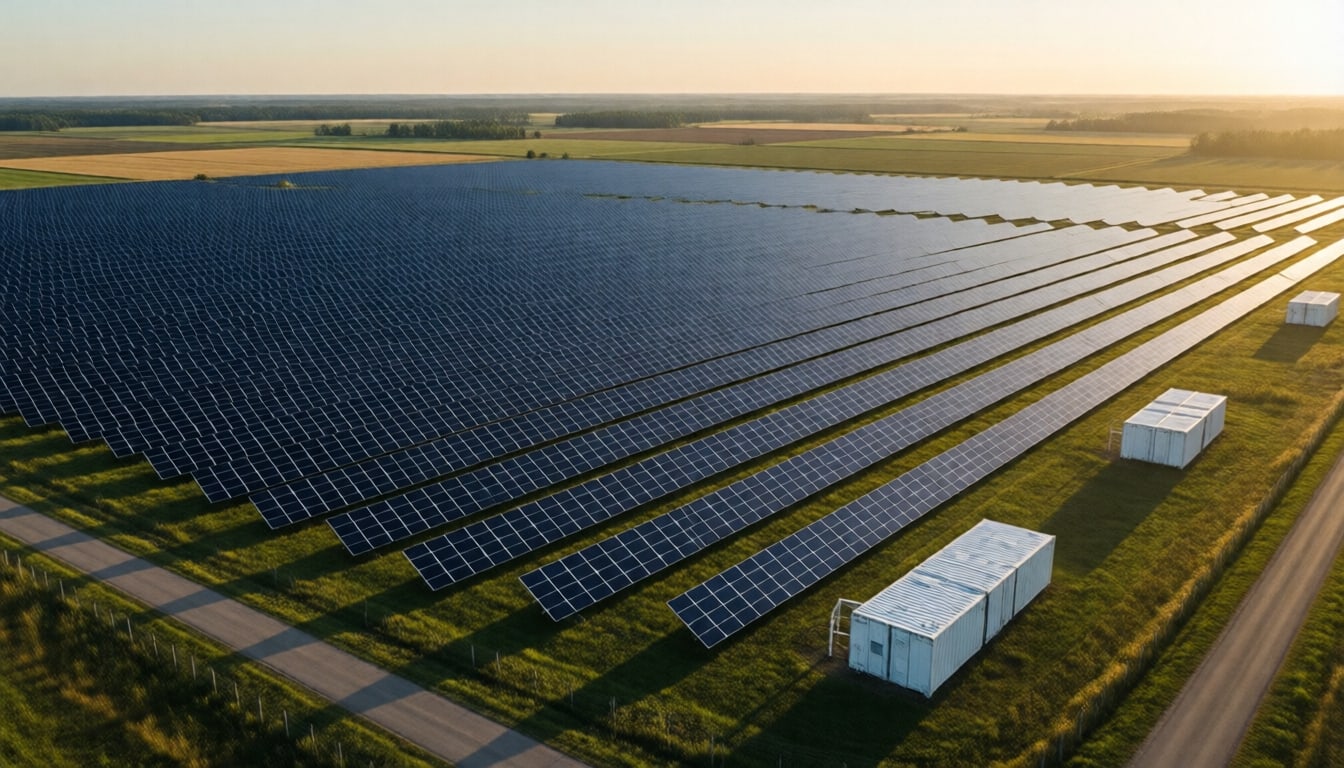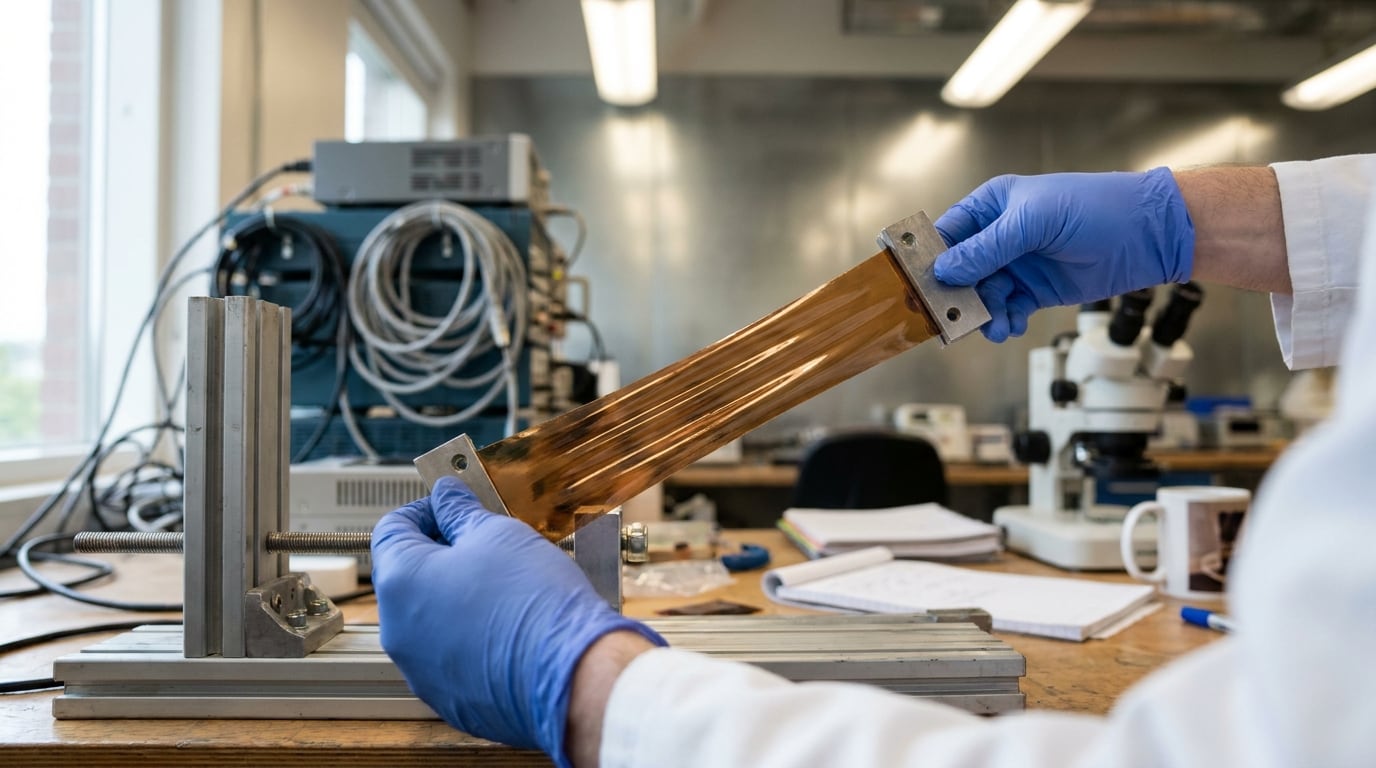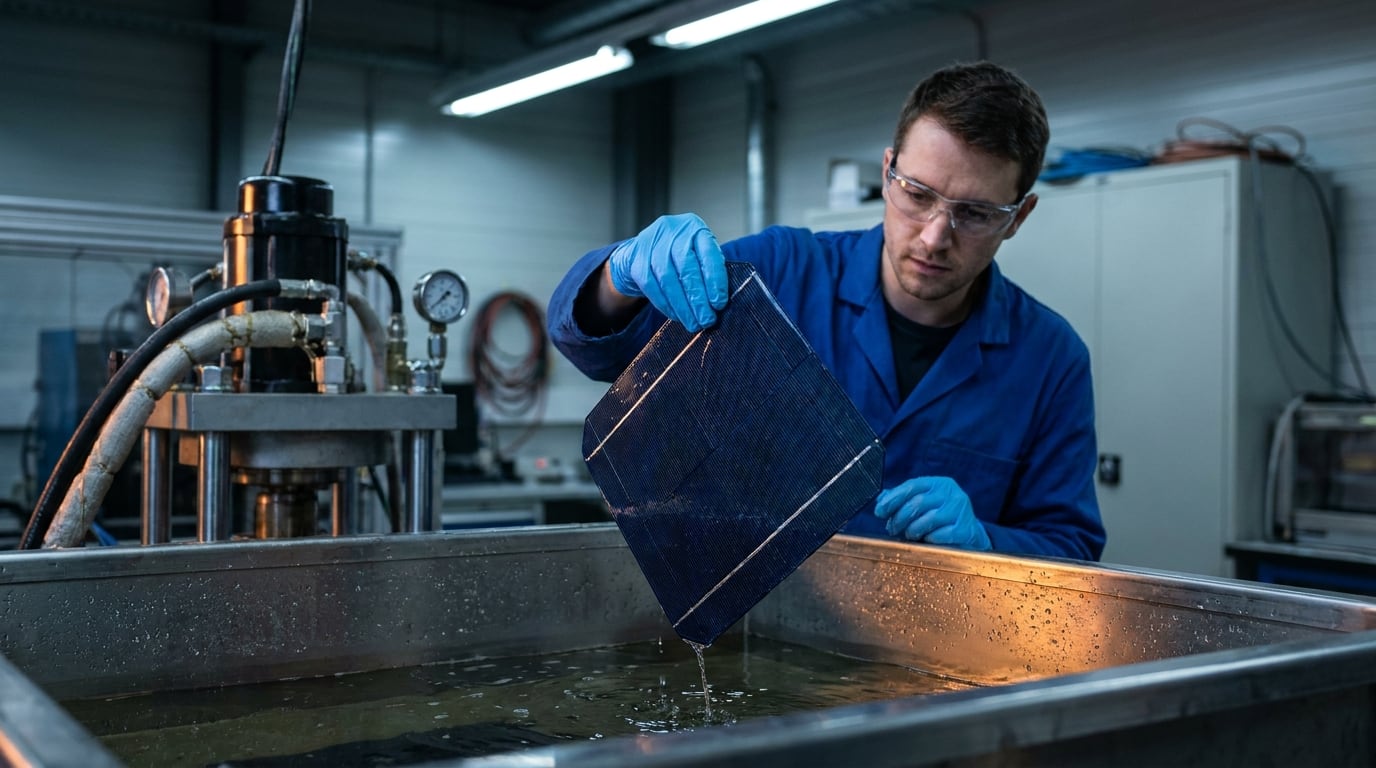
A research team led by academics from AGH University of Krakow reports recovering silver at above 99.99% purity and silicon at above 99.995% from end-of-life photovoltaic panels on pilot recycling lines, according to findings published in Waste Management. Prof. Pradeep Padhamnath and three collaborators compared two ways of separating a panel's layers: a thermal process, and electrohydraulic fragmentation (EHF), a shockwave-based method that separates the layers without heat.
Only EHF recovered the laminating layer around the solar cells completely; the thermal process lost it, the researchers report. The backsheet, the protective polymer layer on the rear of a module, was recovered at room temperature before the layers were separated. The team also assessed whether EHF could be integrated into an existing PV recycling pilot line, assessing how well it fits an existing line and setting out its advantages and challenges.
The pilot-line study builds on the group's 2025 paper in Solar Energy. That paper described EHF as a process in which electrodes connected to a power supply of about 50 kV create an arc in water, generating shockwaves that separate the panel's layers. Laboratory-made glass-glass, glass-backsheet and glass-free panels were tested for 240, 480 or 720 seconds. The earlier work describes the thermal route as heating panels to about 450 °C to 550 °C to decompose polymers such as EVA, PVDF and PET, separating the glass, metallic ribbons and solar cells.
In the 2025 study, the scientists cited EHF's room-temperature operation, its lack of toxic emissions and its ability to recover polymers that would otherwise be burned in pyrolysis. They also found the process was sensitive to feed size and could clog when overloaded; EVA did not fully separate from the backsheet, glass-free panels separated poorly, and some fine powder was lost.
Silver is the main driver of recycling economics. It accounts for just 0.03% of a panel's mass but is potentially worth more than the glass, aluminium and silicon combined, according to Fraunhofer CSP. Other pilot-scale delamination work includes a high-pressure water-jet method that recovered silver at 97% purity. An IEA-PVPS report published in May found recovery rates for high-value materials have improved significantly since a 2024 study in which the benchmark mechanical recycling technology recovered no silicon or silver. The research team said further developments in recycling of polymers and material processing could result in entirely closed-loop recycling of end-of-life PV panels.
Key facts
- Silver recovered at above 99.99% purity on pilot recycling lines
- Silicon recovered at above 99.995% purity
- EHF used a power supply of about 50 kV to create an arc in water
- Thermal route heats panels to about 450 C to 550 C
- Silver accounts for just 0.03% of a panel's mass, according to Fraunhofer CSP
Sources
- Pilot line recovers high-purity silver, silicon from PV panels — pv magazine
Other news outlets are named as sources but not linked.
Discussion
Technical questions and corrections are welcome. Comments are signed and checked before they appear.
No comments yet.
Sign in to add a typed review comment. Reviews are signed with your name.