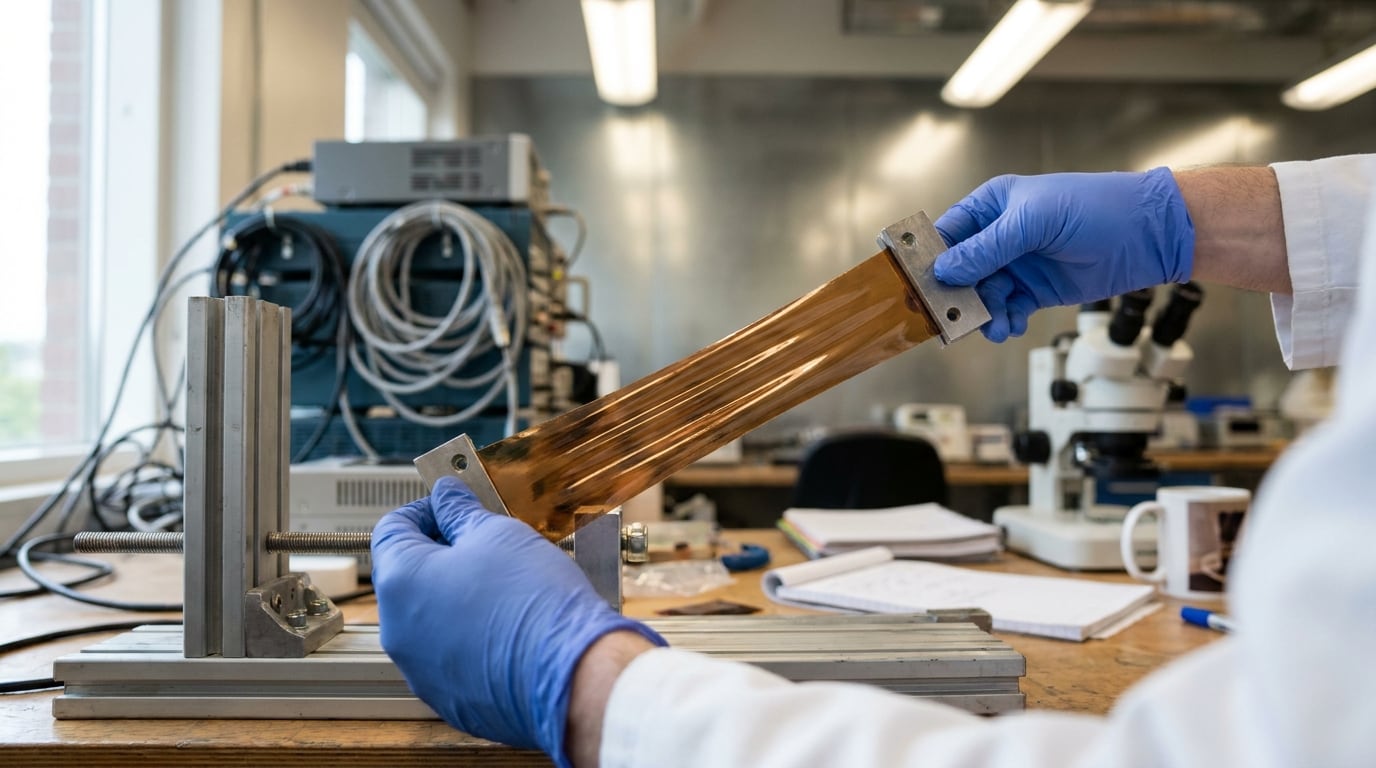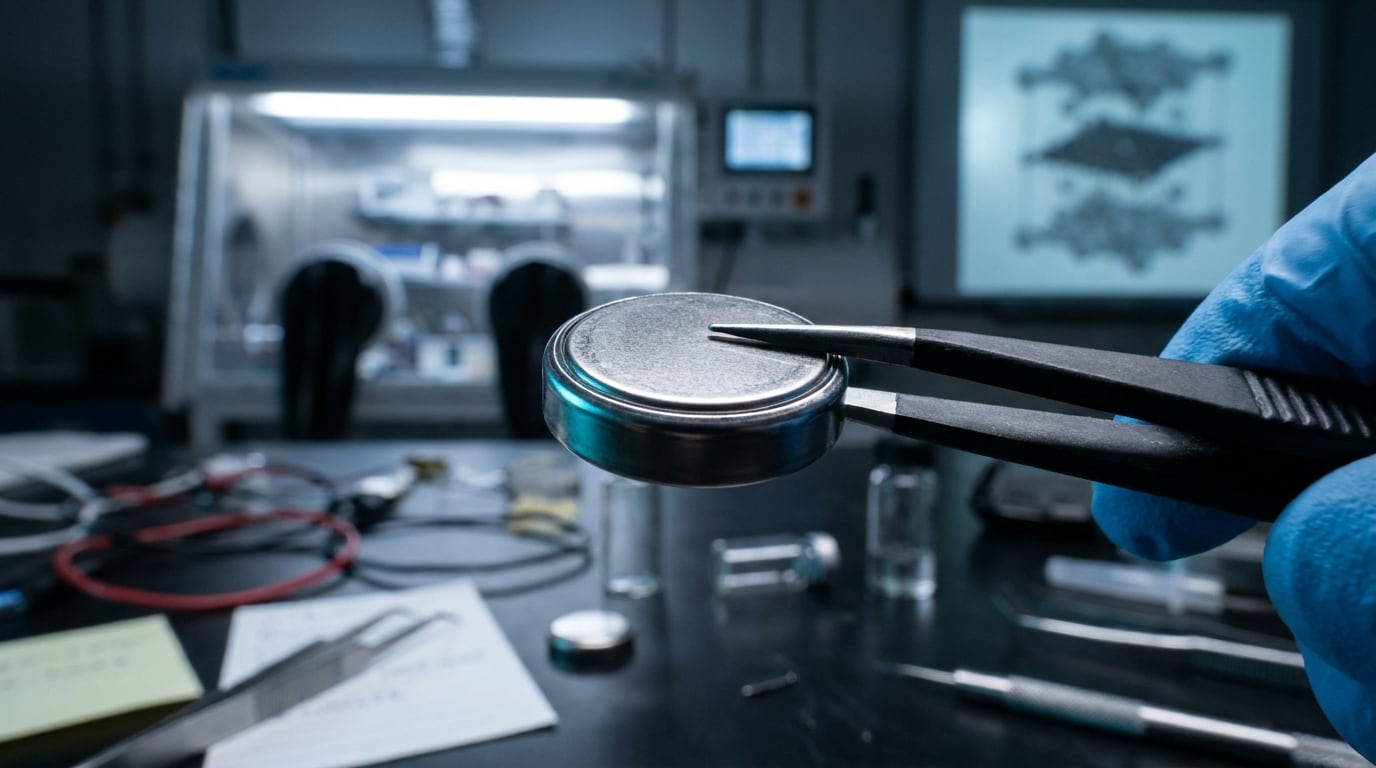
A research team led by Professor Kisuk Kang of the Department of Materials Science and Engineering at Seoul National University College of Engineering has identified a principle for suppressing voltage decay in lithium-rich cathode materials through the arrangement of atomic layers, according to a press release on the work. The findings were published in Nature Sustainability.
Lithium-rich cathode materials can store large amounts of energy. But repeated charging and discharging can alter their structure: transition-metal ions such as nickel move away from their original sites and fail to return, and pairs of oxygen ions bond into "oxygen dimers". The release describes these as irreversible structural evolution. This evolution accumulates and gradually lowers the average discharge voltage, reducing usable energy.
The team focused on how atomic layers are stacked. The O6 structure combines the stacking characteristics of O₃- and O1-type structures within a single crystal. Using electron microscopy, X-ray analysis and atomic-scale simulations, the researchers report that in the O6 structure transition-metal ions attempting to move into sites from which they would struggle to return experience greater repulsive forces from surrounding metal ions. Those forces suppress irreversible migration. The arrangement also reduces the tendency of oxygen ions to form dimers, the release states.
In charge–discharge experiments, a representative O6-type cathode material exhibited an initial discharge capacity of 277 mAh/g. During 100 cycles, its average discharge voltage decreased by only 0.31 mV per cycle, and O6-type materials with various compositions retained more than 98% of their initial average discharge voltage after 100 cycles — better retention than the O₃-type materials used for comparison.
The release states that the atomic-layer design principle is expected to be applicable to other layered cathode materials. The researchers are conducting follow-up studies on how the O6 structure forms, including during an ion-exchange process in which Na ions are replaced with Li ions, with the goal of precisely synthesizing cathodes with desired structures.
Key facts
- More than 98% of initial average discharge voltage retained after 100 cycles for O6-type cathodes
- Average discharge voltage decreased by 0.31 mV per cycle over 100 cycles
- Initial discharge capacity of 277 mAh/g for a representative O6-type cathode material
Sources
- O6-type layered oxides for sustainable high-energy battery cathodes — Nature Sustainability — Seongmin Kang, Sung-O Park, Ho-Young Jang et al.
- Rearranging atomic layers reduces voltage decay in high-capacity lithium-ion battery cathodes — Phys.org (Technology)
Discussion
Technical questions and corrections are welcome. Comments are signed and checked before they appear.
No comments yet.
Sign in to add a typed review comment. Reviews are signed with your name.