Electric-vehicle batteries often retire with 70–80 % of their capacity left — plenty for stationary storage. But a second-life system is a patchwork of aged cells, and the battery management system usually only sees module voltages. How healthy is each cell?
The approach
Cornejo, Meyer-Schwickerath, Sandalinas and Jossen jointly estimate the states and parameters of an equivalent-circuit model for every cell, using field data only. The terminal voltage is modelled as
with charge q tracked by coulomb counting and the open-circuit voltage curve reconstructed with Gaussian process regression.
The system
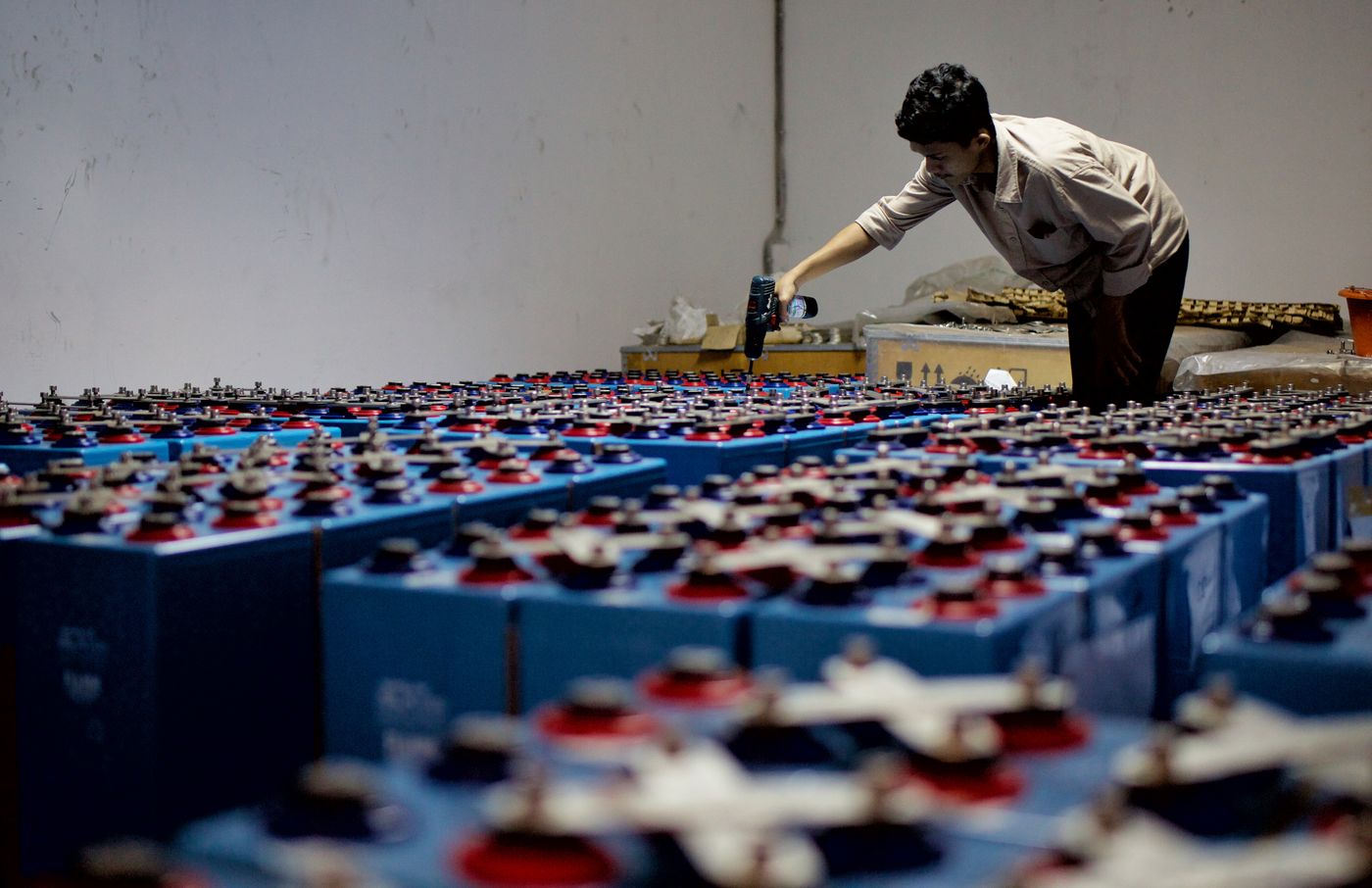
A real second-life installation of 27 modules and 324 cells (logical cells of two in parallel, 100 Ah nominal).
What they found
| Finding | Value |
|---|---|
| Median state of health | 75.4 % (IQR 74.3–76.2 %) |
| SOC imbalance within modules | 6–11 % |
| Faulty cells identified | 2 (38.0 % and 47.8 % SOH) |
| Median voltage RMSE | 5.09 mV |
| Lumped-module model error | overestimates SOH by up to 31 %, SOC by up to 23 % |
The lesson for engineers: a module that looks fine on average can hide a failing cell. Code is archived at Zenodo (doi: 10.5281/zenodo.22281620).
Use it
Discussion
Technical questions and corrections are welcome. Comments are signed and checked before they appear.
No comments yet.
Sign in to add a typed review comment. Reviews are signed with your name.