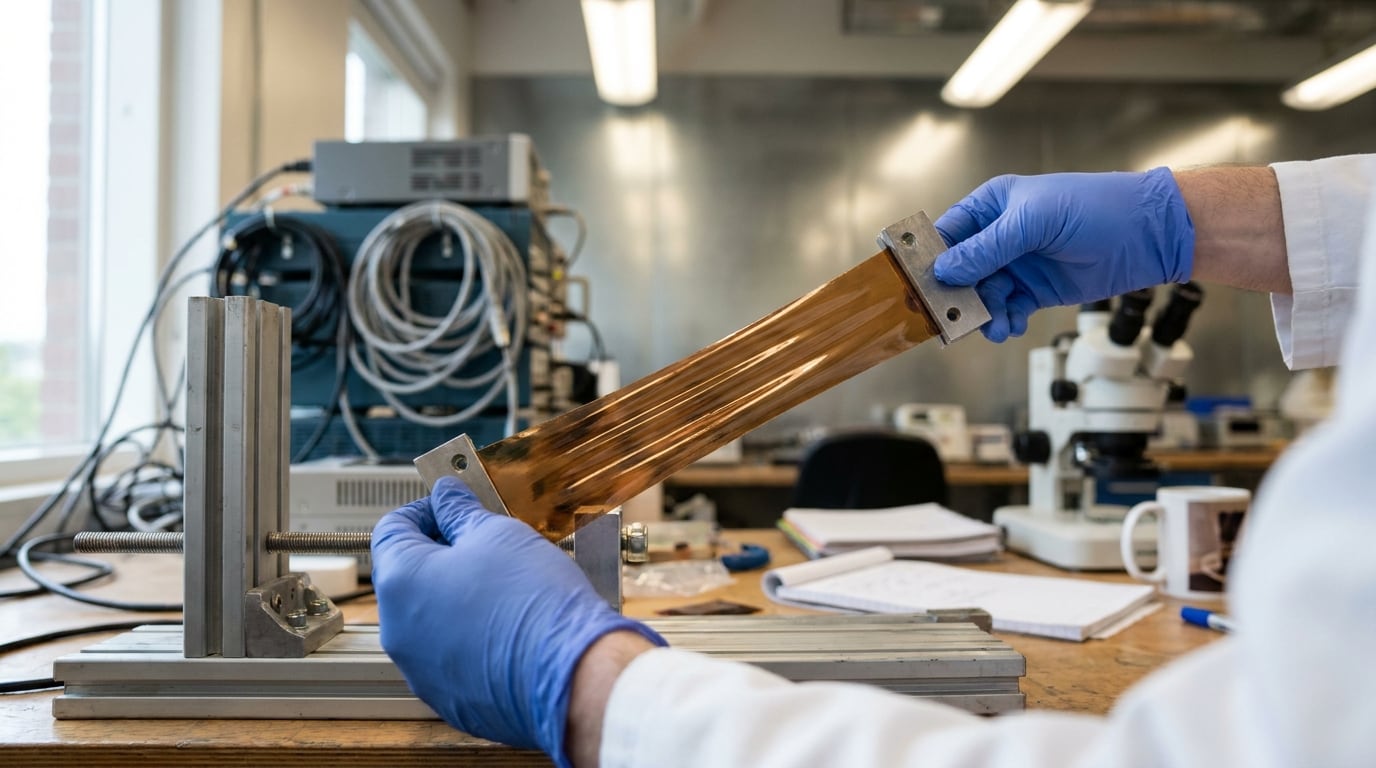
An egg-box topography on the interface between lithium metal and the ceramic electrolyte Li6PS5Cl raises the discharge current at which voiding begins tenfold, from 0.2 to 2 mA cm−2 at 2 MPa and 30 °C, according to a paper published in Nature Energy. The authors, including Shengming Zhang and Bingkun Hu, report that the contoured interface also sustains pulsed currents up to 3 mA cm−2 at 30 °C and 8 mA cm−2 at 60 °C without cell failure.
Voids form during discharge when the flux of Li+ away from the interface through the solid electrolyte exceeds the rate at which lithium can be transported to the interface within the anode, the paper states. The resulting loss of contact area raises local current density and can promote dendrite formation on later charging. The researchers note that high stack pressure, for example above 10 MPa, can alleviate voiding through lithium creep, but that practical cells are very unlikely to operate at such pressures, with ≤2 MPa typically required.
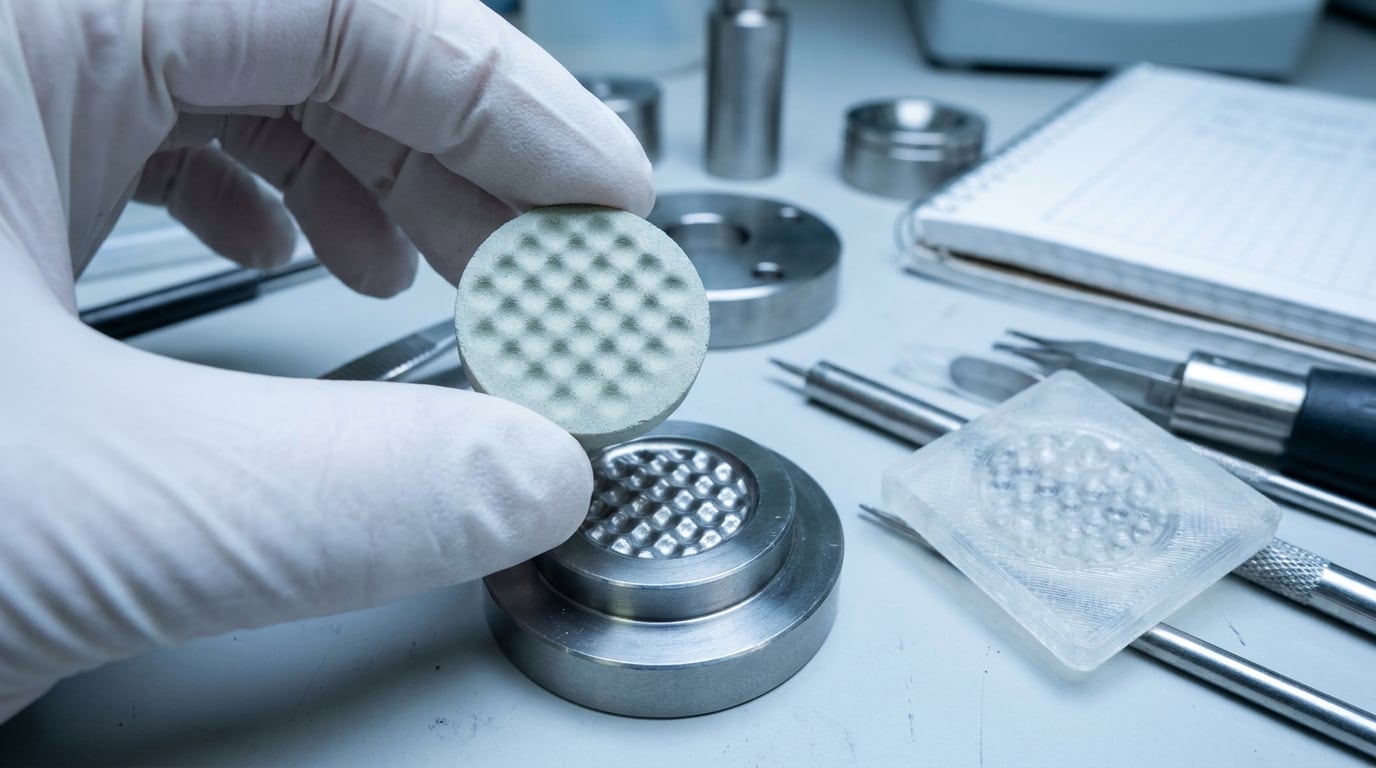
To contour the interface, the researchers used 3D templating: they pressed 3D-printed polymer templates onto Li6PS5Cl powder in a die set, removed the template, sintered the solid electrolyte and attached the lithium anode. They measured the critical current of stripping in three-electrode cells, judging voiding to have commenced when voltage polarisation grew by 2 mV during stripping. Of three topographies calculated previously, the egg-box shape gave the lowest maximum local current; the authors link this to its sinusoidal form, which avoids the sharp corners where high local currents occur.
Contouring does not completely eliminate void formation, the paper states, but it suppresses void growth and the associated voltage polarisation. The contoured interface sustained a discharge sequence derived from the Worldwide Harmonized Light Vehicles Test Procedure, with current peaks reaching 9 mA cm−2, whereas a non-contoured interface failed. A full cell with an 80 µm contoured Li6PS5Cl electrolyte and a LiNi 0.83 Mn 0.06 Co 0.11 O 2 composite cathode cycled stably at a discharge current of 6 mA cm−2 at 2 MPa and 60 °C, while the corresponding non-contoured cell failed during the second charge. The authors describe contouring as requiring no new materials, alloys or interlayers.
Key facts
- Voiding onset current rose from 0.2 to 2 mA cm−2 at 2 MPa and 30 °C with an egg-box contoured interface
- Pulsed currents sustained up to 3 mA cm−2 at 30 °C and 8 mA cm−2 at 60 °C without cell failure
- WLTP-derived discharge sequence sustained with current peaks reaching 9 mA cm−2; non-contoured interface failed
- Full cell with 80 µm contoured Li6PS5Cl electrolyte cycled at 6 mA cm−2 at 2 MPa and 60 °C
Sources
- Contouring mitigates voiding at the lithium/ceramic electrolyte interface on discharging solid-state batteries — Nature Energy — Shengming Zhang, Bingkun Hu, Dominic L. R. Melvin et al.
- Contouring mitigates voiding at the lithium/ceramic electrolyte interface on discharging solid-state batteries — Nature Energy
Discussion
Technical questions and corrections are welcome. Comments are signed and checked before they appear.
No comments yet.
Sign in to add a typed review comment. Reviews are signed with your name.