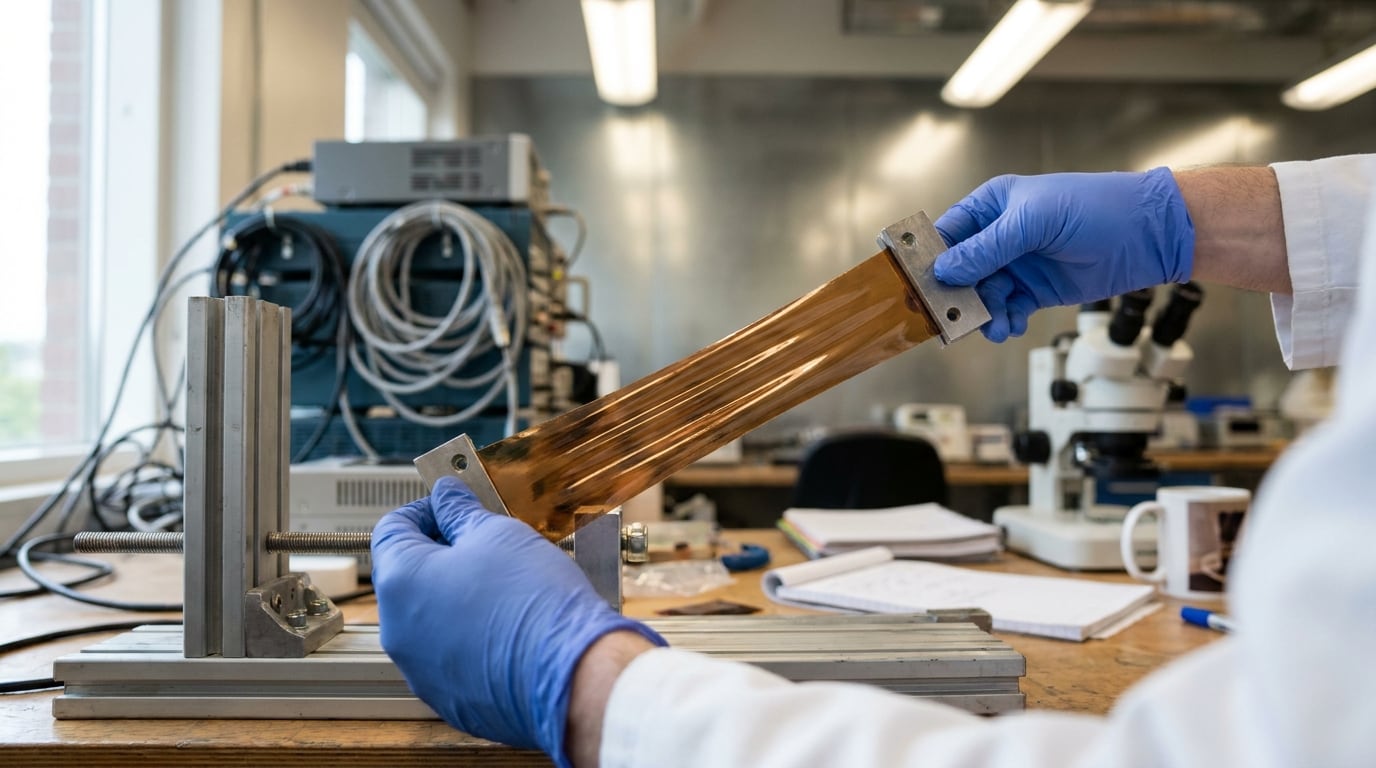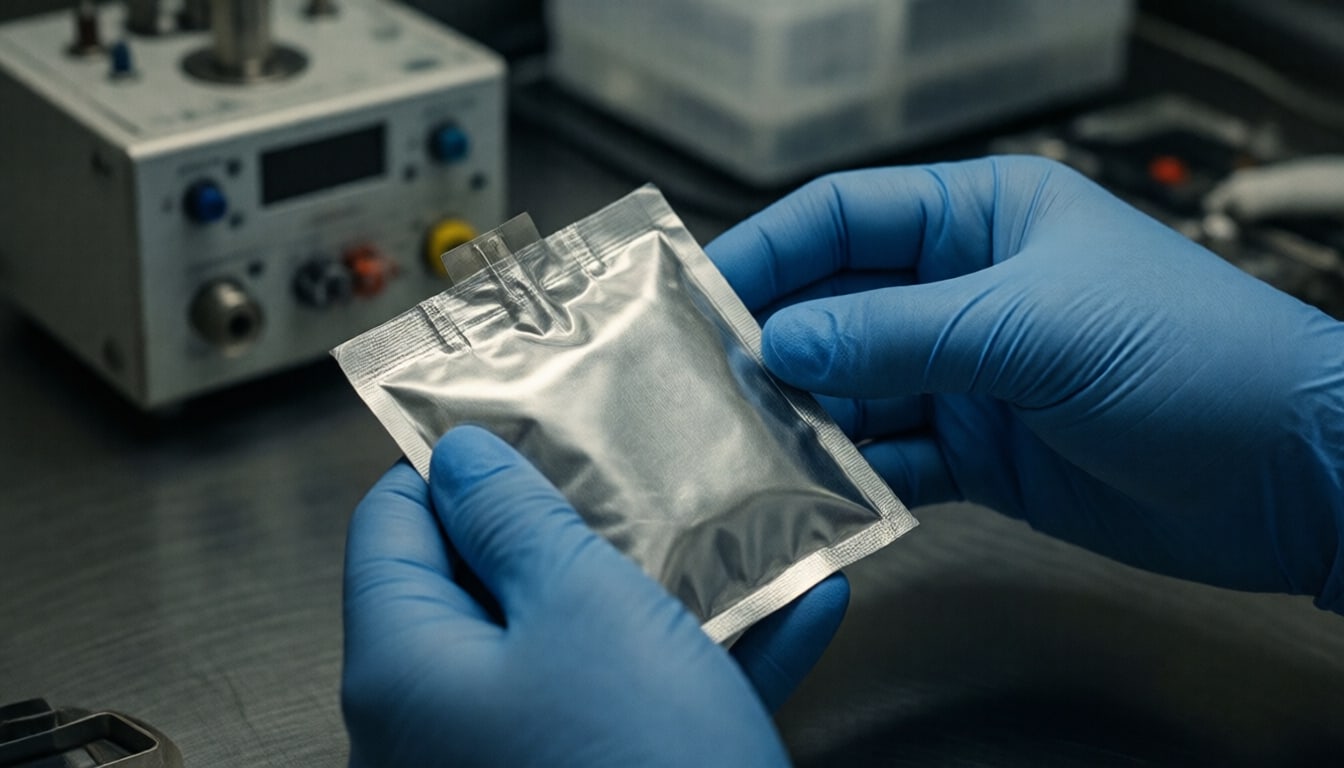
An electrolyte built around the solvent 1,3-dioxane (DOX) pushed anode-free sodium pouch cells past 1,000 cycles, researchers at Xi'an Jiaotong University, the Chinese Academy of Sciences and other institutions report. The work is published in Nature Energy.
Anode-free sodium batteries are assembled without a sodium-metal anode. During charging, sodium ions from the cathode gain electrons and deposit as sodium metal onto a thin metal current collector, forming the anode. The design could reduce manufacturing costs and increase the energy stored relative to weight. But irreversible loss of sodium during charging and discharging can reduce capacity and cycle life, according to the source.
The team examined cyclic ethers with five- or six-atom rings to see how ring structure and internal strain influenced reactions at the sodium-metal surface. Weijiang Xue, senior author, said the group selected DOX because its weak coordination with sodium ions facilitates reversible sodium deposition. Its controlled oligomerization, he said, forms a thin protective interphase that suppresses further electrolyte decomposition.
In pouch cells, the electrolyte retained approximately 80 % of initial capacity after 1,400 charge-discharge cycles at 0.25 C/1 C, the researchers report. Xue said the team tested the electrolytes extensively in 0.3-Ah anode-free pouch cells rather than relying solely on laboratory coin cells, describing this as a more practical and scalable assessment of cycling stability. The work combined theoretical calculations, electrochemical measurements and advanced characterization, including molecular-level identification of oligomeric species in the protective interphase.
Xue said the finding broadens the conventional understanding of interphase design: stable interfaces for sodium metal do not necessarily require inorganic-rich layers derived from salt decomposition. The researchers plan further work on solid-state electrolytes and electrolytes compatible with high-voltage layered-oxide cathodes. Xue said their long-term goal is energy densities comparable to those of high-energy lithium-ion batteries using nickel-rich cathodes, while maintaining more than 1,000 cycles of stable operation.
Key facts
- 0.3 Ah: capacity of the anode-free sodium pouch cells used for extensive electrolyte testing
- 1,400: charge-discharge cycles after which cells retained approximately 80 % of initial capacity at 0.25 C/1 C
- Beyond 1,000 cycles: cycle life reported for anode-free sodium pouch cells with the DOX electrolyte
- 1,3-dioxane (DOX): solvent incorporated in the new electrolyte
Sources
- Stable anode-free sodium batteries enabled by controlled oligomerization — Nature Energy — Shuicen Ding, Xijie Chen, Zhen Yao et al.
- Anode-free sodium batteries last longer thanks to an electrolyte that forms its own shield — Phys.org (Technology)
Discussion
Technical questions and corrections are welcome. Comments are signed and checked before they appear.
No comments yet.
Sign in to add a typed review comment. Reviews are signed with your name.