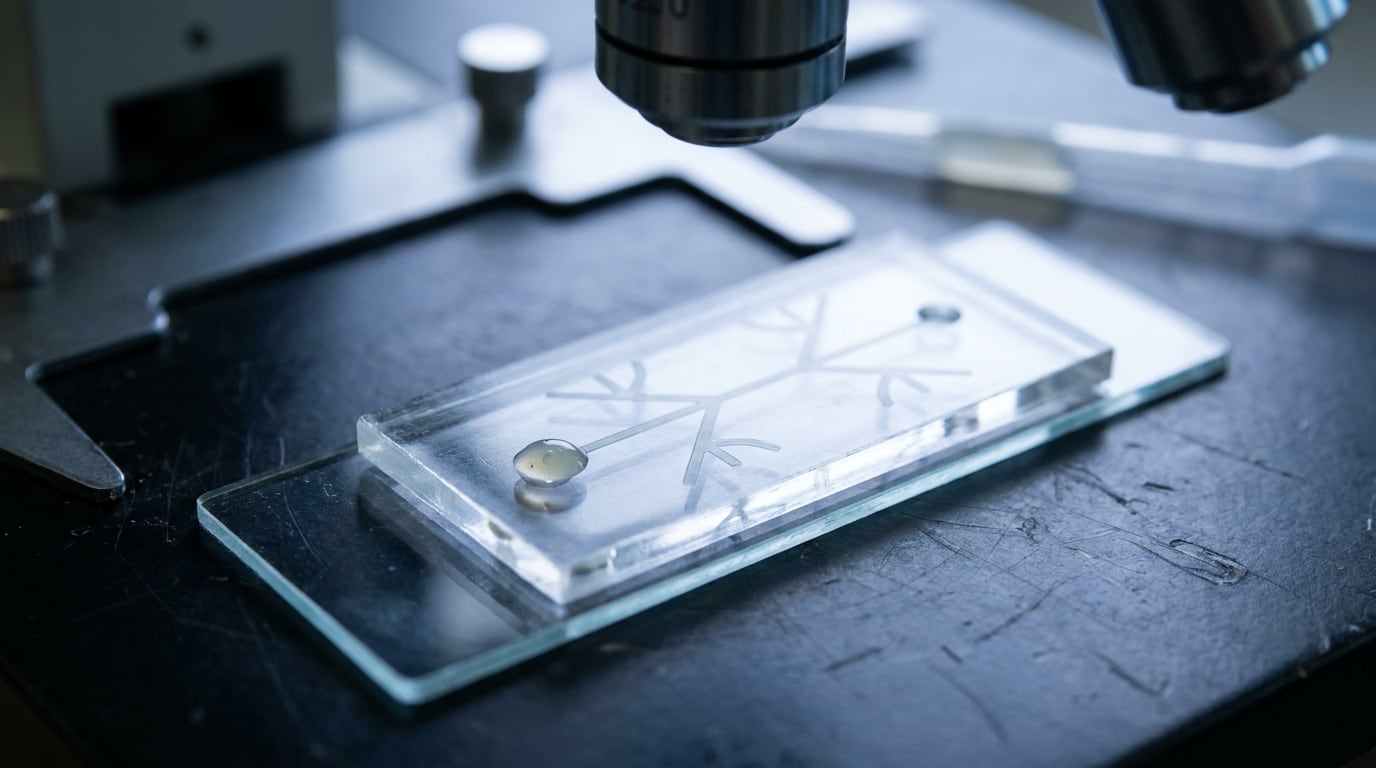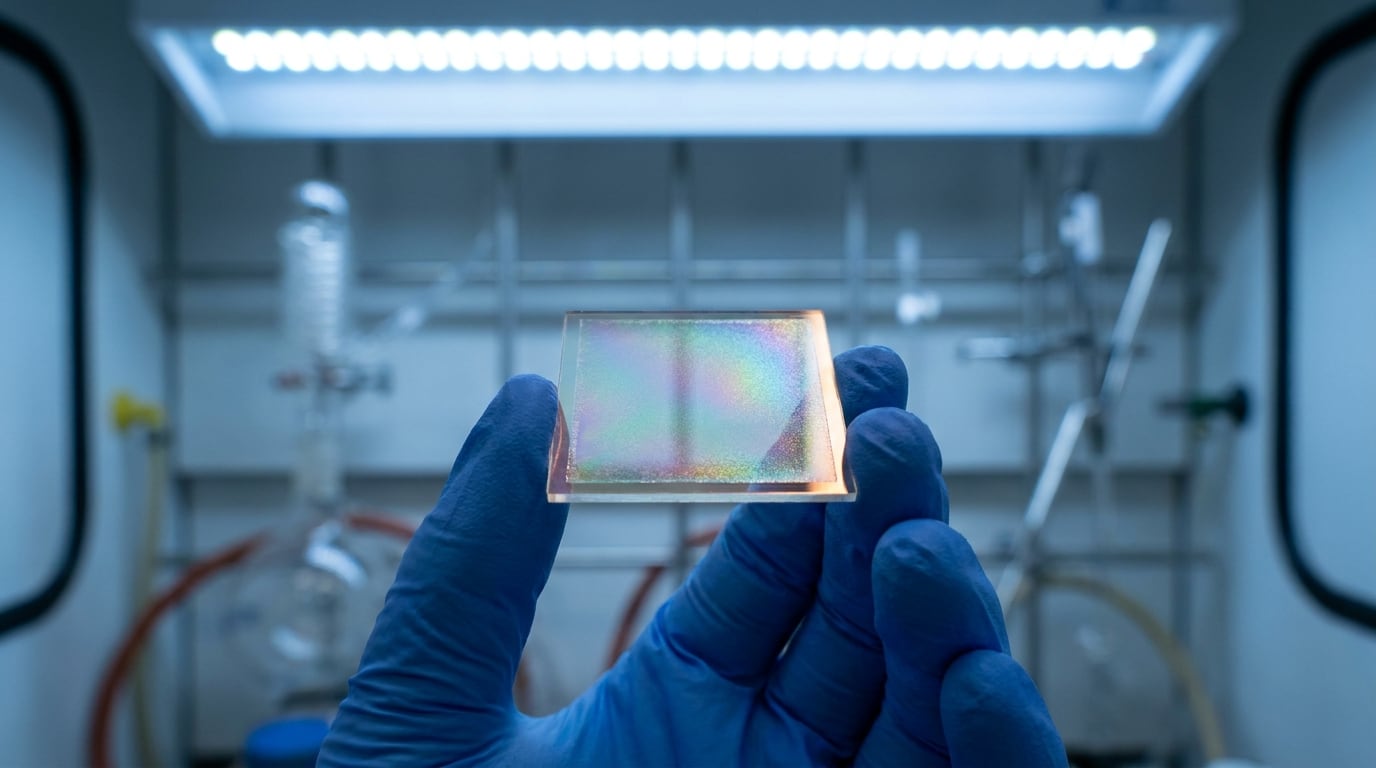
Researchers at Brown University have developed a method for producing extremely thin films of bismuth ferrite, a multiferroic material, that retain their ferroelectric and magnetic properties. The work was published in Nature Materials; the paper's Crossref record lists it as peer reviewed, with a publication date of 28 October 2026.
Multiferroics combine electrical and magnetic behaviour that can be controlled together with very small voltages, which the researchers say could make future electronics more energy efficient. A long-standing obstacle is the "dead layer" effect: when such materials are made thin enough for conventional chips, their atomic structure becomes distorted and internal electric fields disrupt their polarization, and both the ferroelectric and magnetic behaviour are lost.
The Brown team deposited bismuth ferrite onto a foundation of dysprosium scandate, a rare-earth-derived compound whose crystal structure has slightly smaller dimensions than bismuth ferrite. According to the researchers, the resulting mismatch places the bismuth ferrite under compression that helps preserve its atomic structure. A second metallic layer counteracts unwanted electric fields that would otherwise disrupt polarization.
The researchers report that the films remain ferroelectric and magnetic down to a few angstroms in thickness. "We've established that we can get rid of the dead layer," said Lucas Caretta, an assistant professor of engineering at Brown who led the work. The team also reports that the engineered layers caused the bismuth ferrite to exhibit altermagnetism, a form of magnetism combining characteristics of ferromagnetism and antiferromagnetism.
Caretta said ferromagnets give strong, easily read signals for memory and logic but are relatively slow and produce stray fields that hinder dense packing, while antiferromagnets are faster and avoid stray fields but are harder to detect. Altermagnets, he said, can be fast and densely integrated while still providing a strong electrical signal for readout.
Caretta believes they could help bring multiferroic materials closer to practical use in low-power memory and computing devices, but the technology still needs further development before it can be incorporated into commercial chips, according to the release. The research received funding from the U.S. Army Research Office, the National Science Foundation and the U.S. Department of Energy.
Key facts
- Films remain ferroelectric and magnetic down to a few angstroms in thickness, the researchers report
- Bismuth ferrite is deposited onto a dysprosium scandate foundation whose crystal dimensions are slightly smaller
- A second metallic layer counteracts unwanted electric fields that disrupt polarization
- The engineered films exhibit altermagnetism, a form of magnetism combining ferromagnetic and antiferromagnetic characteristics
Sources
- Altermagnetic signatures and topological textures in ultrathin multiferroic BiFeO3 — Nature Materials — Geo Fratian, Maya Ramesh, Xinyan Li et al.
- A breakthrough in magnetism could make AI chips use dramatically less energy — ScienceDaily (Engineering)
Discussion
Technical questions and corrections are welcome. Comments are signed and checked before they appear.
No comments yet.
Sign in to add a typed review comment. Reviews are signed with your name.