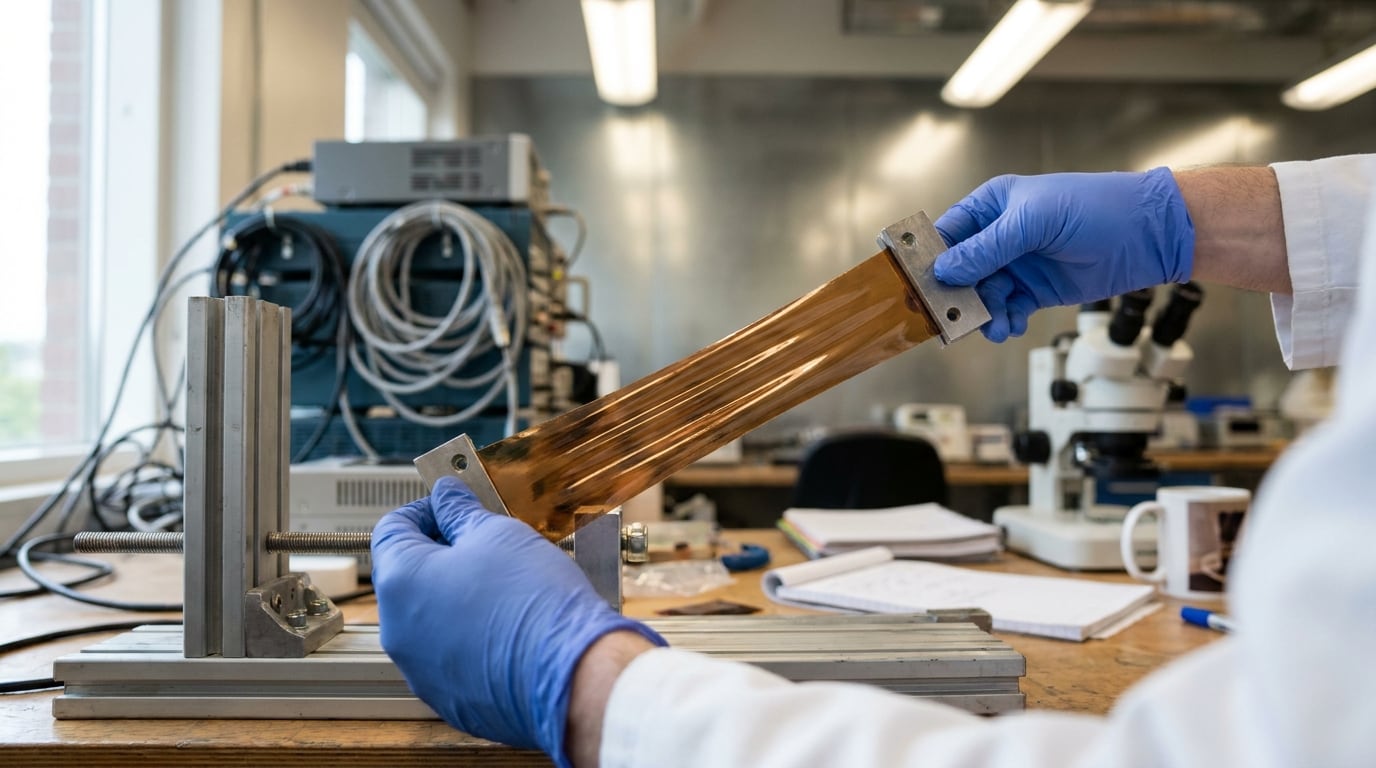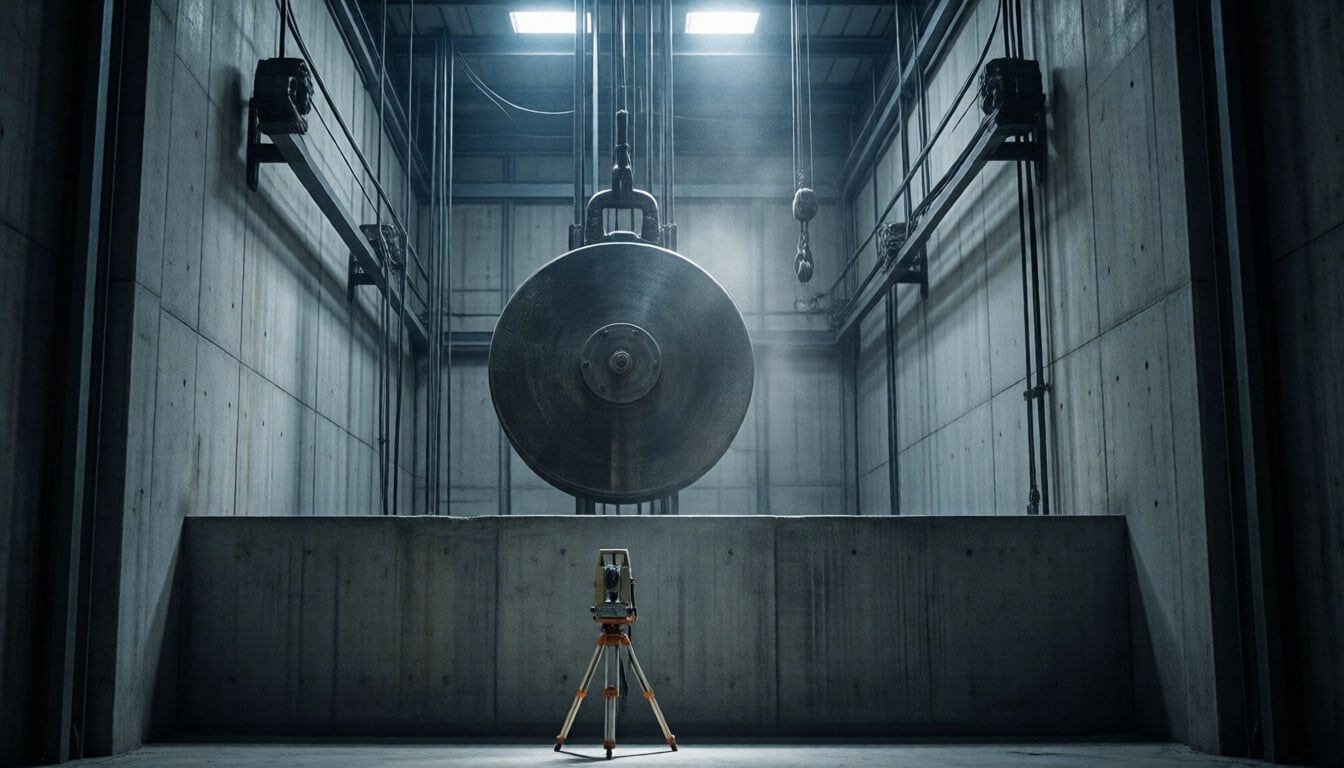
Physicists at the University of Queensland have sent a binary message by gravity alone. They moved an elevator's counterweight of nearly 4,000 pounds (1,815 kg) in a timed sequence and recovered the code on the other side of a separating wall, according to a study published in Science Advances.
The experiment assigned a zero and a one to two positions of the counterweight. A commercial gravimeter, which uses a spring-mounted mass, registered the resulting changes in vertical pull. Those changes shifted the measured acceleration by about 50 nanometres per second squared — roughly five billionths of the pull ordinarily felt from Earth.
Each bit got a full minute: 25 seconds for the counterweight to move, 10 seconds for settling and 25 seconds to average readings. After correcting for Earth's tides and instrument drift, the team recovered all 49 bits of the message plus the short start and finish sequences. The transmission took 63 minutes and spelled one word: "Gravity."
Co-author Charles Woffinden says a gravitational signal, unlike the electromagnetic signals used in wireless communication, cannot simply be screened out by ordinary material in its path. The work grew out of an attempt to weigh trucks without driving them onto a scale. Lead author Andrew Groszek says the team realised the same physics could encode and transmit information once the idea was shown to work.
The researchers estimate that a more sensitive gravimeter and a faster elevator could raise capacity to about 15 bits per minute. In a separate calculation, they put the potential range at roughly 1,640 feet (500 metres). That figure assumes a much more sensitive detector, a well-positioned 75-metric-ton mass and acceptance of a noisier signal.
The authors note a limitation: vibrations or the pull of other moving masses could drown out the message even with more sensitive instruments. They suggest much more work may be needed to make the system practical. For comparison, the article cites a 2012 Fermilab experiment that used a neutrino beam to send a signal through about 790 feet of earth at six bits per minute.
Key facts
- 49 bits recovered in the gravity transmission, plus start and finish sequences
- 63 minutes total transmission time for the single word "Gravity"
- About 50 nanometres per second squared change in measured acceleration
- Estimated capacity of about 15 bits per minute with a more sensitive gravimeter and faster elevator
- Estimated potential range of roughly 1,640 feet (500 metres) under stated assumptions
Sources
- Gravity sends unstoppable messages for the first time — New Atlas
Other news outlets are named as sources but not linked.
Discussion
Technical questions and corrections are welcome. Comments are signed and checked before they appear.
No comments yet.
Sign in to add a typed review comment. Reviews are signed with your name.