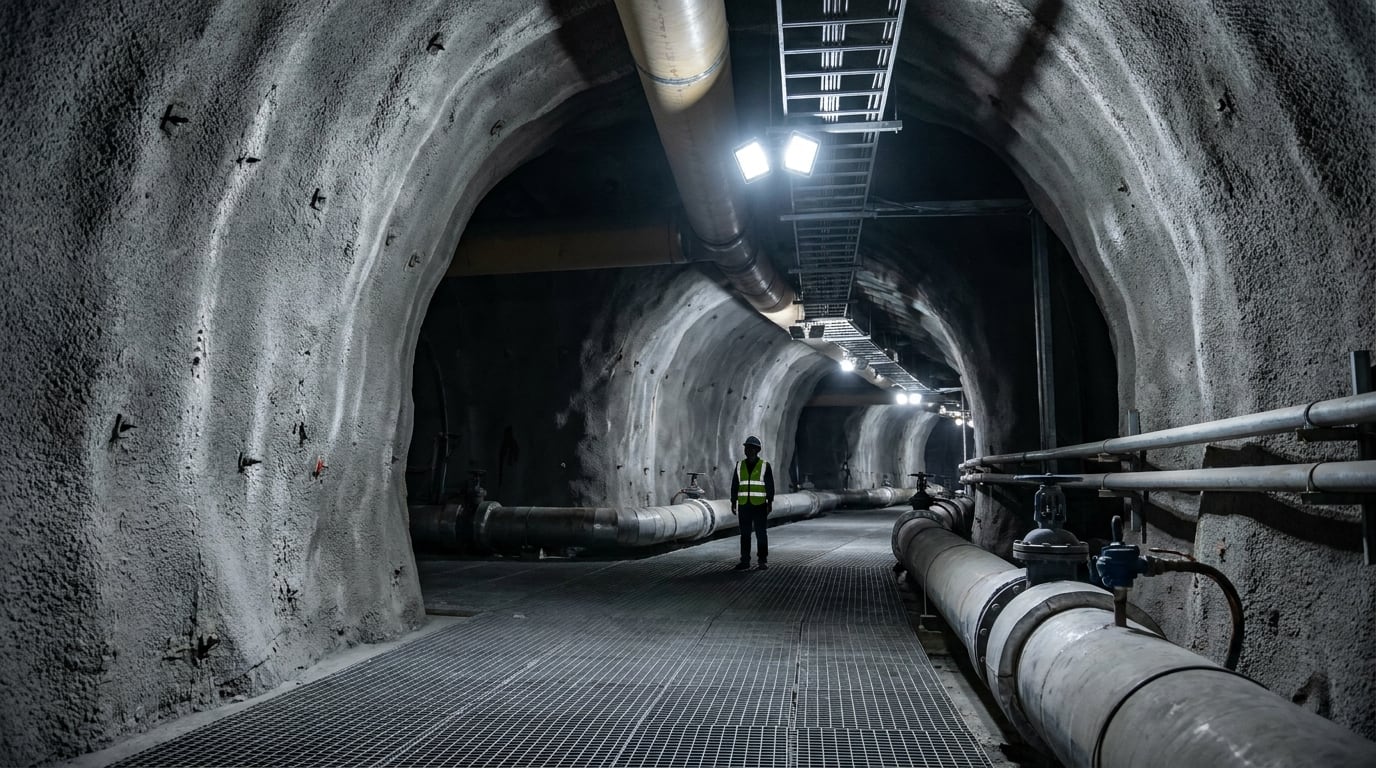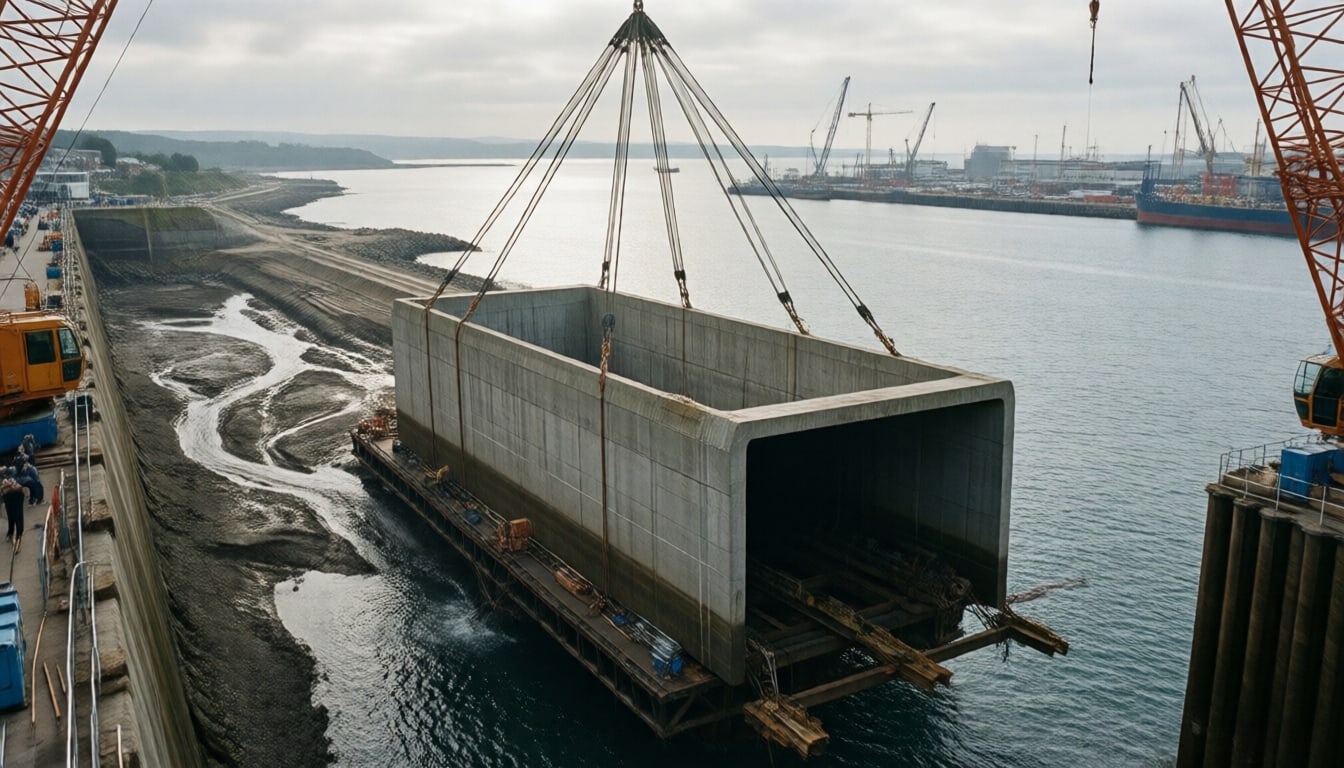
The fourth element of the Fehmarnbelt immersed tunnel between Rødbyhavn in Denmark and Puttgarden in Germany has been lowered into place. Named Nykøbing Falster, it is 217 m long and weighs more than 73,500 tonnes, bringing the completed length to nearly 900 m of the 18 km crossing.
The tunnel will consist of 89 elements: 79 standard elements and 10 special elements with basements, placed about every 2 km. So far 16 standard and 3 special elements have been cast; the first special element is expected to be immersed in autumn 2026.
When it opens, the crossing will take 7 minutes by train and 10 minutes by car.
How an immersed tunnel works
Instead of boring through the seabed, the elements are cast in a dry factory, floated out, ballasted and sunk into a trench dredged in the seabed. Once joined, water pressure on the far end of each new element pushes it against its neighbour and compresses the rubber gasket between them. Then the trench is backfilled.
How large is that pressure? At 40 m depth, hydrostatic pressure is about 0.4 MPa — try it:
Use it
Sources
Discussion
Technical questions and corrections are welcome. Comments are signed and checked before they appear.
No comments yet.
Sign in to add a typed review comment. Reviews are signed with your name.