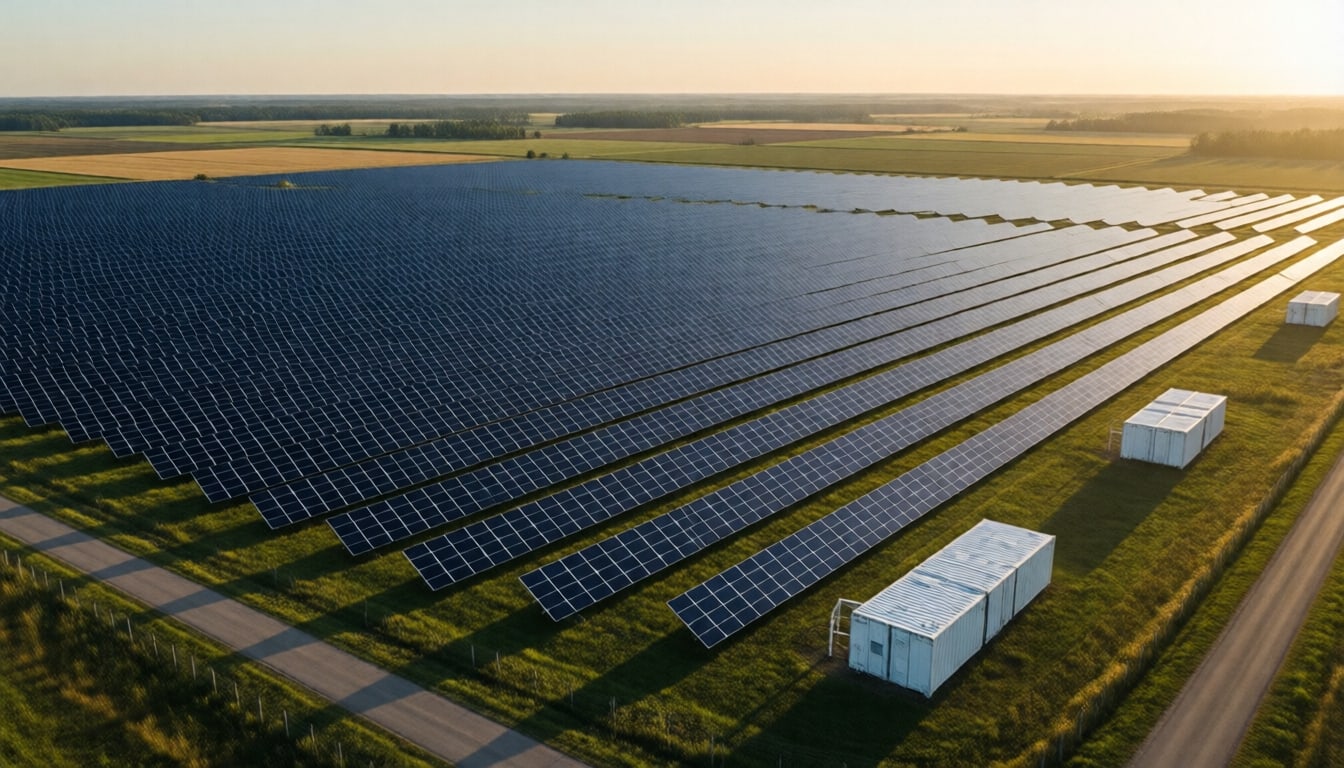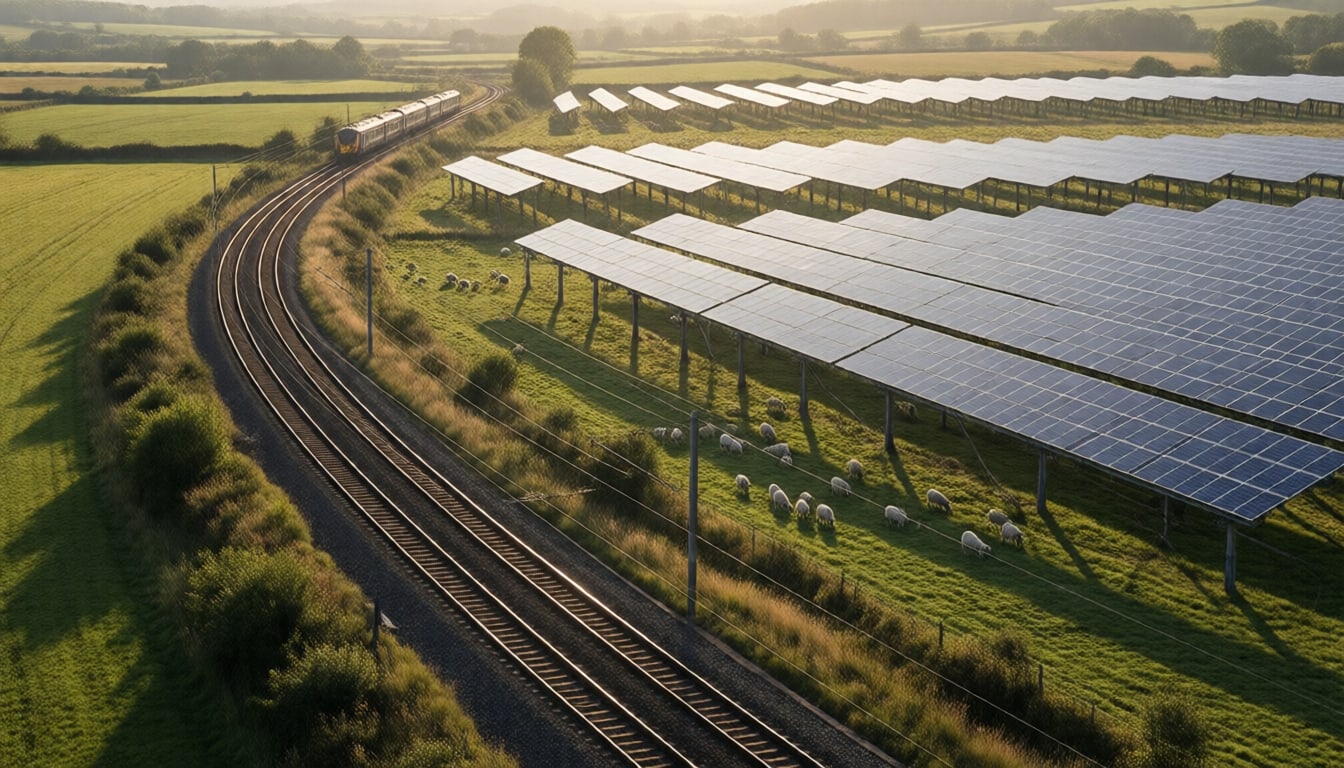
Researchers at the University of Exeter in the United Kingdom have modelled a green hydrogen rail system on the 482 km Penzance–London corridor. The system would be supplied by agrivoltaics, train-rooftop photovoltaics and track-integrated photovoltaics. The work is a simulation study, published in Solar Energy under the title "From pasture to platform integrating agrivoltaics and green hydrogen for the Penzance–London railway corridor".
The researchers chose the corridor because conventional electrification faces challenges related to coastal exposure, tunnels and high infrastructure costs, according to the paper. Their proposed system combines agrivoltaic generation, rail-integrated PV and a hydrogen production and refuelling hub in Penzance. The modelling used PVsyst, HOMER Pro and DSSAT to assess solar generation, hydrogen production, economics and crop responses to shading.
Running the entire route on hydrogen would require approximately 2,574 metric tons of hydrogen and 148.67 GWh of electricity annually, the results indicate. The agrivoltaic system was estimated to generate 151 GWh per year, against 104.45 GWh for track-integrated PV and 0.70 GWh for train-rooftop PV.
Grid-supplemented agrivoltaics was the most cost-effective configuration modelled, with a net present cost of GBP 263.07 million and a levelised cost of hydrogen of GBP 7.99/kg. The levelised cost reached GBP 27.83/kg for an off-grid configuration sized to meet demand on the worst solar generation day, and GBP 28.11/kg for a system relying on seasonal hydrogen storage.
Adding track-integrated or train-rooftop PV increased lifecycle costs and reduced financial returns, making both economically unattractive under the modelled conditions. The scientists acknowledged that hydrogen production costs remain above projected competitiveness targets. They highlighted the need for financial support, further infrastructure optimisation and additional uncertainty analysis. They concluded that near-term deployment of hydrogen rail in the UK is better suited to shorter, non-electrified segments than to end-to-end intercity routes.
Key facts
- GBP 7.99/kg levelised cost of hydrogen for grid-connected agrivoltaic configuration
- GBP 28.11/kg levelised cost with seasonal hydrogen storage
- 2,574 metric tons of hydrogen required annually for the full route
- 151 GWh per year estimated agrivoltaic generation, against 148.67 GWh annual demand
- 5.41 years estimated payback period for grid-connected agrivoltaic-only case
Sources
- Researchers find solar-powered hydrogen rail system could achieve LCOH of $10.47/kg — pv magazine
Other news outlets are named as sources but not linked.
Discussion
Technical questions and corrections are welcome. Comments are signed and checked before they appear.
No comments yet.
Sign in to add a typed review comment. Reviews are signed with your name.