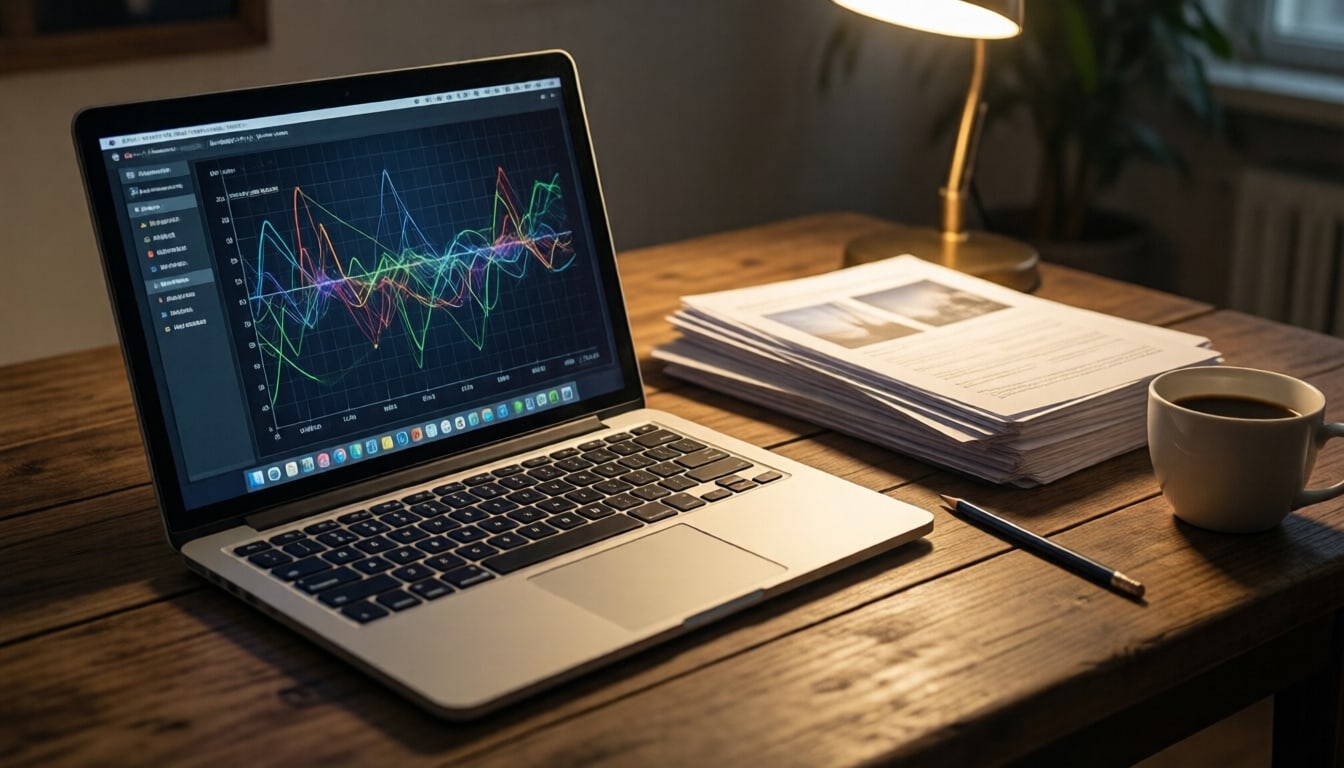
A typical engineering paper contains a model — a set of equations with parameters — and a few figures showing what the model does for a handful of parameter values. The reader gets the pictures. The model itself, the thing that took months to build, is left as an exercise.
That made sense when papers were printed. It makes much less sense now. Data from PLOS ONE studies show how fast the supporting material around papers decays: about one in five science articles suffers from reference rot, and supplementary data hosted inside PDFs is far more likely to disappear than data with a DOI.
What "running" means
It does not mean every paper must ship a software package. It means three modest things:
- The governing equations are live. If a paper says ΔT = R_T·Q, the reader can change R_T and Q and see what happens — like the playground below.
- The units are checked. Every rearrangement of a published equation can be checked for dimensional consistency by computer. We do this for every formula on Engineer Paper.
- The data and code have a permanent address. A DOI from Zenodo is free. A GitHub link is not an archive.
Why this is not just nice-to-have
Interactive papers find errors. A slider that produces a negative temperature, or a curve that bends the wrong way, catches a sign error faster than any reviewer. Replication gets easier when the model is in front of you.
What we are doing about it
Engineer Paper's Submission Studio lets authors turn equations into interactive models with one line, records which parts of a work are reproducible, and keeps every version. It is a start. We would rather publish fewer papers that run than many that only sit there.
Use it
Sources
Discussion
Technical questions and corrections are welcome. Comments are signed and checked before they appear.
No comments yet.
Sign in to add a typed review comment. Reviews are signed with your name.